Carbon fiber reinforced plastic guide for material buyers

What carbon fiber reinforced plastic means in purchasing terms
Carbon fiber reinforced plastic is a composite material made by combining carbon fiber reinforcement with a polymer matrix. Buyers usually see it shortened to CFRP, and the closely related term carbon fiber reinforced polymer is often used for the same class of materials. The important point for sourcing is that CFRP is not a single plastic grade like ABS, PP, or nylon. It is an engineered material system, and its performance depends on the fiber, resin, fiber direction, laminate design, processing method, and quality control.
In practical purchasing, a request for carbon fiber reinforced plastic is incomplete unless it defines the part form, loading direction, service temperature, surface requirements, test methods, and acceptable variation. A glossy woven carbon surface may look advanced, but structural CFRP performance comes from the reinforcement architecture and validated properties, not from appearance alone. For related material selection topics, see the Buying Guides section.
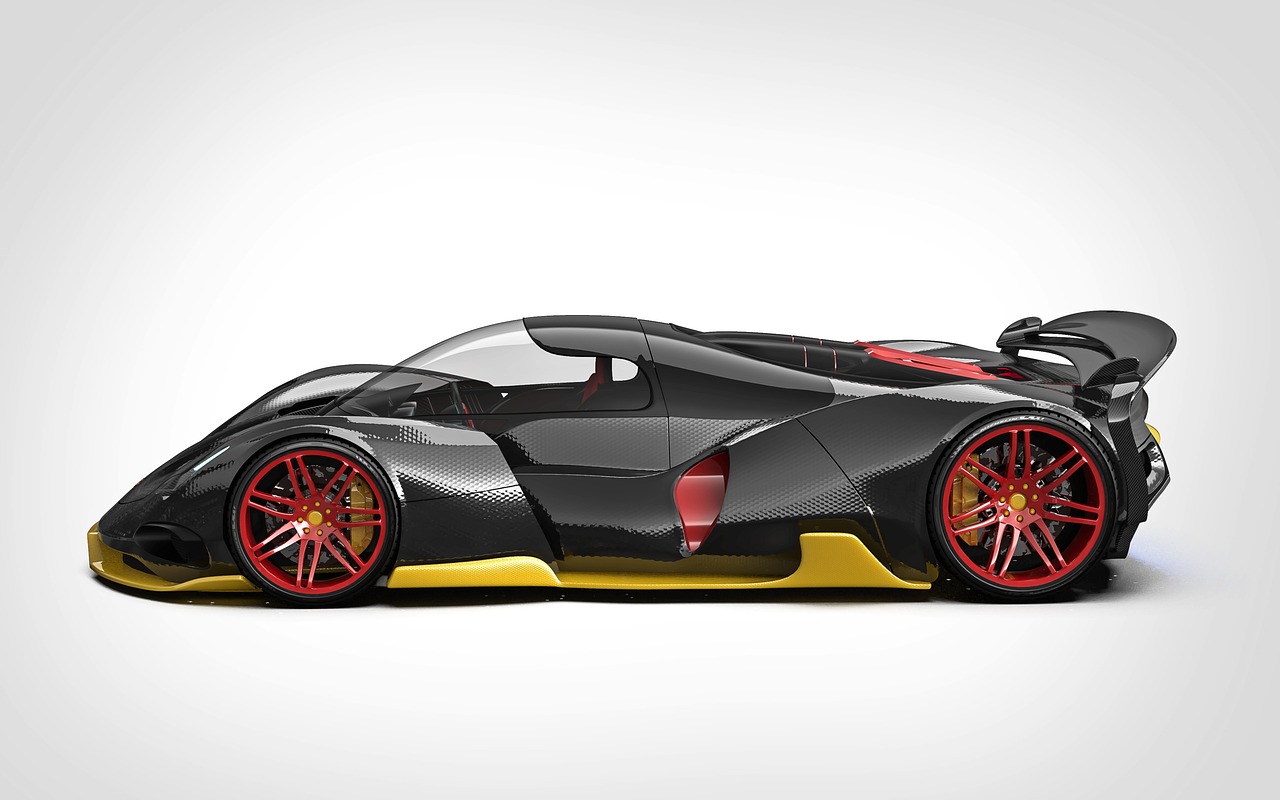
Clear terminology helps avoid confusion between raw fiber, fabric, and finished composite parts. IUPAC describes carbon fibers as filaments, tows, yarns, or rovings consisting mostly of carbon by mass. In a fiber reinforced polymer, the fibers provide much of the strength and stiffness, while the polymer matrix binds the fibers, protects them, transfers load, and gives the part its shape. This division of roles is why CFRP can outperform many unreinforced plastics, but also why poor layup, voids, weak bonding, or the wrong resin can lead to disappointing results.
Why buyers choose CFRP instead of metal or conventional plastics
The main reason to consider CFRP is its strength-to-weight and stiffness-to-weight potential. When weight is costly, as in aircraft, drones, robotics, high-speed equipment, medical devices, premium sporting goods, and some vehicle structures, CFRP can provide high structural performance with less mass than many metals. Boeing lists the 787 airframe as about 50% composites by weight, while Airbus describes the A350 airframe as using a high share of advanced materials including carbon fiber reinforced polymer in major structures. These aircraft examples do not mean every product should use CFRP, but they show why the material is valued when weight savings justify the cost and process control.
CFRP also offers corrosion resistance because the polymer matrix is not a rusting metal. This can be valuable in marine, chemical, outdoor, and infrastructure-adjacent applications, provided the selected resin is compatible with the moisture, UV exposure, temperature, and chemicals expected in service. CFRP can also be designed with directional properties, so fibers can be oriented along the main load paths instead of adding uniform thickness everywhere.
For buyers, that design freedom is both an advantage and a risk. A metal sheet is generally more predictable in all directions than a composite laminate. CFRP may be extremely stiff in one direction and much weaker in another if the layup is not designed for multi-directional loads. It is most attractive when engineering data, part geometry, and loading conditions are known early enough to design the laminate properly.
Key limitations that should be discussed before ordering
CFRP is often described as lightweight and strong, but buying decisions should start with its constraints. The first is cost. Carbon fiber, prepreg handling, controlled curing, machining, inspection, and skilled labor usually make CFRP more expensive than glass fiber reinforced plastic, commodity plastics, and many metal solutions. U.S. Department of Energy and vehicle lightweighting references have repeatedly identified carbon fiber cost, joining, modeling, production infrastructure, and high-volume supply as barriers in automotive use.
The second limitation is damage behavior. CFRP does not dent like many metals. Impact can create delamination, matrix cracking, fiber breakage, or hidden internal damage. For safety-related parts, buyers should ask how the supplier inspects parts and what acceptance criteria apply. Non-destructive inspection, visual standards, coupon testing, and traceability may be necessary for critical components.
The third limitation is joining and galvanic compatibility. Carbon fiber is electrically conductive, and direct contact with certain metals in wet environments can contribute to galvanic corrosion if the joint is not isolated or designed correctly. Adhesive bonding, mechanical fastening, inserts, and hybrid joints should be specified rather than left to improvisation during production or assembly.
The fourth limitation is temperature and fire performance. A CFRP part may be limited by the resin long before the carbon fiber itself is affected. Buyers should specify the continuous service temperature, peak temperature, glass transition temperature requirement, flame or smoke requirements if applicable, and chemical exposure. A part intended for consumer appearance trim does not need the same matrix system as a bracket near heat, solvents, or structural load.
Forms of CFRP and how they affect performance
Carbon fiber reinforced plastic can be supplied in several forms. The right choice depends on load requirements, production volume, geometry, finish, and budget.
| Material form | Typical use | Buyer consideration |
|---|---|---|
| Prepreg fabric or tape | Aerospace, motorsport, precision parts, high-performance laminates | Offers controlled resin content and high properties, but needs storage control, tooling, and curing discipline. |
| Dry fabric with infusion or resin transfer molding | Panels, shells, medium-size structures, marine and industrial parts | Can suit larger parts, but void control and resin flow design are critical. |
| Pultruded profiles | Rods, beams, strips, stiffeners, repeatable linear shapes | Efficient for constant cross sections, but less flexible for complex geometries. |
| Chopped fiber compounds or sheet molding compounds | Molded components with moderate structural needs | Better for higher-volume shaping, but properties are usually lower and less directional than continuous fiber laminates. |
| Thermoplastic carbon fiber composites | Parts needing faster cycles, welding potential, toughness, or recyclability improvement | Processing temperatures can be higher, material cost can be significant, and supplier capability matters. |
Continuous fibers are usually chosen for structural performance because load can follow the fiber direction. Woven fabrics add handling stability and visual appeal, but they introduce crimp, which can reduce some mechanical efficiency compared with unidirectional tape. Chopped fiber materials are easier to mold into complex features, but they rarely match continuous fiber laminate performance in primary load paths.
Thermoset versus thermoplastic CFRP
Most traditional high-performance CFRP parts use thermoset resins such as epoxy, vinyl ester, phenolic, or polyester systems. Epoxy is common in aerospace, sporting goods, and precision structures because it can provide strong adhesion to carbon fiber and good mechanical performance. Once cured, however, a thermoset network does not melt and flow again like a typical thermoplastic. This gives dimensional stability, but it also complicates recycling and reshaping.
Thermoplastic CFRP uses matrices such as PA, PPS, PEEK, PEKK, or related engineering polymers, depending on cost and performance needs. Thermoplastic systems can offer faster forming cycles, improved impact toughness in some designs, weldability, and a more plausible route to remelting or reprocessing. The trade-offs can include higher processing temperatures, higher material costs for high-performance grades, and the need for suitable consolidation equipment.
For buyers, the resin decision should not be based only on the words thermoset or thermoplastic. Ask for mechanical property data at the relevant temperature and humidity, processing windows, shelf-life or storage requirements, repair method, finishing options, and end-of-life expectations. A well-controlled thermoset laminate can be the right answer for many structural parts, while a thermoplastic composite may be better where cycle time, toughness, welding, or recyclability is central to the project.
How to specify CFRP before requesting quotations
A clear specification reduces price uncertainty and avoids comparing unlike materials. If a supplier quotes a lower price but assumes a lower fiber volume, cheaper resin, looser tolerance, or cosmetic-only carbon fabric, the comparison is misleading. See also: Care and Storage.
| Specification item | What to define | Why it matters |
|---|---|---|
| Fiber type and form | Unidirectional tape, woven fabric, braid, chopped fiber, tow size, modulus grade if known | Controls stiffness, strength direction, appearance, and cost. |
| Resin system | Epoxy, vinyl ester, phenolic, polyester, PA, PPS, PEEK, or other polymer | Determines temperature resistance, toughness, chemical behavior, curing or molding route, and compliance. |
| Laminate schedule | Layer count, orientation, symmetry, thickness, core materials if any | Defines actual structural behavior more accurately than the word carbon alone. |
| Property targets | Tensile, flexural, compression, shear, impact, fatigue, and environmental conditioning requirements | Prevents overbuying or under-specifying the material. |
| Test standards | Relevant ASTM or ISO methods such as ASTM D3039 or ISO 527-4 for tensile properties and ISO 14125 or ASTM D790 for flexural evaluation where appropriate | Ensures reported values are comparable and not marketing-only numbers. |
| Quality criteria | Void limits, surface class, dimensional tolerance, fiber alignment, inspection method, traceability | Reduces hidden defects and production disputes. |
| Assembly method | Bonding, fastening, inserts, edge sealing, galvanic isolation, repair instructions | Many CFRP failures begin at joints, holes, edges, or interfaces. |
Buyers should also ask whether quoted data comes from flat test coupons, representative parts, or actual production lots. Coupon data is useful, but it may not fully represent a curved, drilled, bonded, or thick-section component. If the part is safety-critical, qualification should include representative geometry and service conditions.
Where CFRP is a strong fit and where another material may be better
CFRP is a strong candidate when weight reduction has measurable value, stiffness is important, corrosion resistance matters, and the design can benefit from directional reinforcement. Examples include lightweight panels, robotic arms, drone frames, racing and cycling components, prosthetic and medical supports, inspection equipment, precision instrument structures, and selected industrial automation parts.
Another material may be better when the main buying driver is low cost, high-volume commodity molding, high ductility after impact, simple field repair, or easy recycling through existing plastic waste streams. Glass fiber reinforced plastic is often more economical when weight savings do not need to be maximized. Aluminum can be easier to machine, inspect, join, and recycle in many applications. Unreinforced or mineral-filled engineering plastics may be sufficient when loads are moderate and integrated molded features are more valuable than maximum stiffness.
A practical rule is to choose CFRP only when its higher price solves a specific performance problem. If the part merely needs a carbon-look surface, decorative film, a carbon fabric cosmetic layer, or glass fiber with a carbon veneer may be more appropriate than a full structural CFRP laminate. If the part truly carries load, cosmetic carbon should not be substituted for validated reinforcement.
Sustainability and recycling considerations
CFRP sustainability is complex. A lighter part can reduce energy use during operation in aircraft, vehicles, moving machinery, or portable equipment. At the same time, carbon fiber production is energy-intensive, and many thermoset CFRP parts are difficult to recycle after use. Mechanical recycling can grind scrap into lower-value fillers or short fibers. Thermal and chemical processes can recover carbon fiber more effectively, but they must balance cost, fiber quality, resin removal, emissions, and scale.
Recent public research continues to focus on this problem. In September 2026, Pacific Northwest National Laboratory described a low-temperature solvolysis approach for epoxy-amine CFRP recycling that reported high retention of recycled fiber mechanical properties under the study conditions. That type of work is promising, but buyers should not assume that every CFRP part already has a simple closed-loop recycling route. The practical end-of-life option depends on resin chemistry, contamination, coatings, inserts, fiber length, local recycling capacity, and whether recovered fiber has a qualified second application.
For purchasing teams, the useful step is to request scrap management information early. Ask whether offcuts are segregated, whether production scrap can be returned or sold to a recycler, whether thermoplastic options are available, and whether the supplier can document material composition. Traceability is increasingly important because mixed composite waste is much harder to reuse at high value.
Frequently asked questions
Is carbon fiber reinforced plastic stronger than steel?
It can have a much higher strength-to-weight ratio than steel in well-designed forms, but the answer depends on fiber grade, resin, orientation, laminate design, loading direction, and failure mode. A simple statement that CFRP is stronger than steel can be misleading because metals are generally more isotropic and ductile, while CFRP is highly design-dependent.
Is CFRP the same as carbon fiber?
No. Carbon fiber is the reinforcement. CFRP is the composite made when carbon fibers are embedded in a polymer matrix. Buying carbon fiber fabric alone does not provide a finished structural material unless the resin system, layup, curing or molding process, and inspection criteria are also defined.
Can carbon fiber reinforced plastic be injection molded?
Short or chopped carbon fiber reinforced thermoplastic compounds can be injection molded. Continuous fiber CFRP structures are usually made by methods such as layup, compression molding, resin transfer molding, infusion, pultrusion, tape placement, or thermoforming of consolidated sheets. The process choice changes both cost and mechanical performance.
Does CFRP corrode?
The polymer matrix and carbon fiber do not rust like steel, but CFRP parts can still degrade through UV exposure, moisture effects, chemical attack, matrix cracking, heat, or poor edge sealing. Carbon fiber can also create galvanic corrosion risks when joined directly to certain metals in the presence of an electrolyte, so joint design matters.
What should buyers request from a CFRP supplier?
Request the fiber and resin description, laminate schedule, manufacturing process, mechanical data with test methods, temperature and chemical limits, dimensional tolerances, inspection plan, finishing options, joining guidance, lead time, minimum order quantity, and scrap or recycling approach. For critical applications, also request production traceability and representative part testing rather than relying only on generic data sheets.


