Fiber reinforced polymer applications and material selection guide

Why fiber reinforced polymer matters in plastic material selection
Fiber reinforced polymer is a family of composite plastic materials made by combining a polymer matrix with reinforcing fibers. It is selected when a part needs to carry load, reduce weight, resist corrosion or maintain dimensional stability better than an unreinforced plastic can. In practical engineering work, FRP is not a single material and it is not a simple drop-in replacement for steel, aluminum or conventional plastics. Performance depends on the fiber type, resin chemistry, fiber direction, manufacturing method and service environment.
For that reason, FRP is widely discussed in construction, transportation, marine, energy, electrical and industrial equipment markets. Public infrastructure agencies describe FRP bridge decks, GFRP rebars, CFRP strengthening systems and pultruded structural members as established uses. Industry sources also point to continued demand in transportation, aerospace, wind energy and construction as manufacturers look for lighter materials with better corrosion resistance.
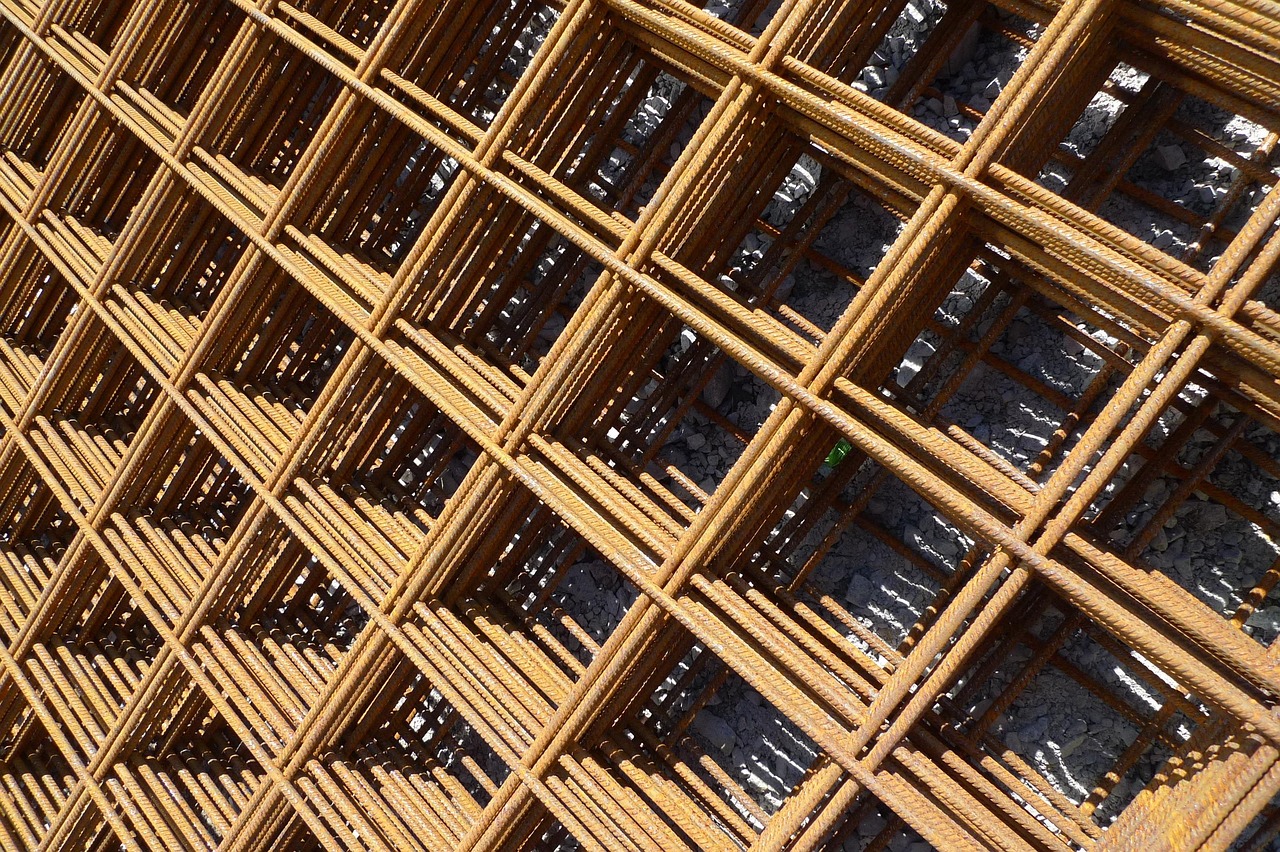
What fiber reinforced polymer is made from
An FRP composite has two main parts. The polymer matrix gives the part its shape, transfers stress between fibers, protects the reinforcement and contributes chemical, thermal and processing behavior. The fiber reinforcement supplies much of the tensile strength and stiffness. Together, they create a material whose properties can be engineered around a specific load path rather than treated as uniform in every direction.
Common reinforcement options
- Glass fiber is widely used because it offers a practical balance of strength, electrical insulation, corrosion resistance and cost. GFRP is common in construction products, panels, gratings, rebar, pipes and many industrial parts.
- Carbon fiber is used where high stiffness and low weight are critical. CFRP is associated with aerospace, performance automotive parts, pressure vessels, sporting goods and structural strengthening.
- Aramid fiber is valued for impact resistance and toughness in selected protective, marine and transportation components.
- Basalt and natural fibers are used in more specialized applications where temperature behavior, sustainability targets or cost-performance balance justify their selection.
Thermoset and thermoplastic matrices
Thermoset matrices such as polyester, vinyl ester and epoxy remain common in many FRP applications because they can provide strong bonding, chemical resistance and stable molded shapes. Vinyl ester is often chosen for corrosive environments, while epoxy is common where adhesion and mechanical performance are important. Thermoplastic matrices can support faster processing, impact resistance and potential reprocessing advantages, although continuous-fiber thermoplastic composites can require higher temperatures, pressure and specialized equipment.
Where FRP delivers practical value
The strongest use cases for fiber reinforced polymer are not simply applications that need strength. FRP is most often considered when strength-to-weight ratio, corrosion resistance, design flexibility or reduced maintenance has measurable value over the product life. The table below summarizes common application areas and why FRP is used.
| Application area | Typical FRP forms | Main reason for use |
|---|---|---|
| Construction and infrastructure | GFRP rebar, CFRP wraps, bridge decks, pultruded profiles, panels | Corrosion resistance, low weight, strengthening of existing structures and reduced maintenance exposure |
| Marine and coastal equipment | Hull components, gratings, ladders, railings, enclosures, pipe systems | Resistance to saltwater corrosion and lower maintenance than many metal alternatives |
| Transportation | Body panels, structural inserts, interior supports, leaf springs, underbody shields | Weight reduction, part consolidation and fuel or energy efficiency opportunities |
| Aerospace and defense | CFRP laminates, sandwich panels, fairings, interior structures | High specific stiffness, fatigue resistance and weight-sensitive structural performance |
| Electrical and utility products | Insulating rods, crossarms, cable trays, equipment housings | Electrical insulation, weather resistance and reduced weight during installation |
| Industrial and chemical service | Tanks, ducts, scrubbers, gratings, covers, pipe | Chemical resistance and the ability to tailor resin systems for specific environments |
| Energy and pressure systems | Wind turbine blades, composite pressure vessels, pipe and support structures | Long-span lightweight structures, fatigue behavior and corrosion resistance |
In civil infrastructure, FRP is especially attractive where chloride exposure, de-icing salts or marine conditions can accelerate steel corrosion. The U.S. Federal Highway Administration has described lightweight construction and corrosion resistance as key advantages for composite bridge decks, GFRP reinforcing bars, CFRP prestressing strands and pultruded structural members. This does not mean FRP is always lower cost at purchase. The business case often depends on installation weight, service life, maintenance access and the consequences of corrosion.
How engineers match FRP to an application
Choosing FRP starts with the service requirement, not with the brand name of a resin or fiber. A structural part, a corrosion-resistant tank and an electrical enclosure may all be called FRP, but they need different designs, processing routes and quality controls.
- Load direction matters. Continuous fibers are most effective when aligned with the main stress direction. A unidirectional laminate may be very strong along the fiber direction but weaker across it. Woven, stitched or chopped fiber formats create different balances of stiffness, toughness and processability.
- The environment changes the material choice. Temperature, moisture, ultraviolet exposure, chemicals, fatigue cycles and fire requirements influence the resin system, coating, additives and laminate design.
- Manufacturing sets realistic geometry. Pultrusion is efficient for constant-profile beams, rods and channels. Filament winding is well suited to pipes and pressure vessels. Resin infusion and hand lay-up support larger shell shapes. Compression molding and injection molding are used where production volume and dimensional repeatability are priorities.
- Joining and inspection need early planning. Bolting, bonding, inserts and hybrid metal-composite interfaces can become weak points if they are added late in the design. Non-destructive inspection can also be more complex than visual checks on metal parts.
- Life-cycle cost is often more relevant than material price. FRP may have a higher initial material cost than commodity plastic or steel, but lower weight, easier installation, fewer corrosion repairs or longer service intervals can change the total cost comparison.
Benefits and limits compared with metals and unreinforced plastics
FRP sits between several material categories. It can outperform commodity plastics in stiffness and strength, and it can compete with metals where corrosion resistance and weight reduction are priorities. At the same time, it brings design rules that are different from both metals and unreinforced plastics.
| Selection factor | FRP advantage | Important limitation |
|---|---|---|
| Weight | High strength-to-weight ratio can reduce handling, transport and installation loads | Part thickness may increase if stiffness, impact or fire performance is the limiting factor |
| Corrosion resistance | Useful in marine, chemical, wastewater and de-icing salt environments | Resin selection must match the actual chemical and temperature exposure |
| Design flexibility | Fiber orientation, laminate schedule and molding method can be tailored to the application | Incorrect layup or poor quality control can produce inconsistent performance |
| Electrical behavior | Many GFRP systems provide useful insulation properties | Carbon fiber composites can be electrically conductive and require different design precautions |
| Thermal and fire behavior | Special resin systems, additives and protective designs can improve performance | Fire, smoke, toxicity and heat distortion requirements must be verified for the use case |
| End of life | Thermoplastic composites may offer more reprocessing options than many thermosets | Recycling thermoset FRP remains challenging, and recovered fibers may lose length or value |
For many buyers, the main mistake is treating fiber reinforced polymer as if it were isotropic like a metal plate. FRP is anisotropic, meaning its properties depend on direction. This is an advantage when the load path is known because material can be placed where it contributes most. It becomes a risk when impact, drilling, edge loads, thermal cycling or moisture exposure are not considered during design.
Market and standards context
FRP adoption is supported by two trends: demand for lighter, corrosion-resistant materials and gradual improvement in design guidance. The American Composites Manufacturers Association reported in its 2026 State of the Industry material that more than 1.9 billion pounds of glass reinforced polyester and vinyl ester thermoset composites were sold in the United States and Canada during the first half of 2025. The same industry discussion pointed to transportation, aerospace, wind energy and construction as areas where composites continue to receive attention.
In construction, code and specification development is important because engineers, owners and inspectors need predictable design rules. ACI CODE-440.11-22 provides building code requirements for structural concrete reinforced with glass fiber-reinforced polymer bars. That type of standard does not make every project suitable for FRP, but it reduces uncertainty for properly designed concrete applications using GFRP reinforcement. See also: Buying Guides.
Market interest should still be balanced with practical constraints. Carbon fiber supply and cost can be more volatile than glass fiber. Thermoset recycling remains a long-term issue. Fire performance, smoke requirements, bonding quality, UV exposure and repair methods need verification for each application. FRP is a strong material category, but responsible specification still depends on service conditions, applicable standards and qualified manufacturing.
Application selection checklist
For product designers and material buyers, a short checklist can prevent expensive mismatches:
- Define the primary function: structural load, corrosion barrier, electrical insulation, weight reduction or appearance.
- Identify the load direction, peak load, fatigue cycles and acceptable deflection.
- List environmental exposures, including temperature, chemicals, moisture, UV, abrasion and fire requirements.
- Choose a likely fiber system, resin family and process route before finalizing geometry.
- Confirm relevant standards, inspection requirements and installation methods.
- Compare life-cycle cost rather than relying only on purchase price per kilogram.
- Plan repair, recycling or disposal expectations early, especially for large thermoset parts.
For more material application topics, visit the Product Applications section.
Frequently asked questions
Is fiber reinforced polymer the same as fiberglass?
Fiberglass is a common type of FRP that uses glass fibers in a polymer matrix. Fiber reinforced polymer is the broader category and can include glass, carbon, aramid, basalt, natural or hybrid fibers combined with thermoset or thermoplastic matrices.
When is FRP better than metal?
FRP can be better than metal when corrosion resistance, lower weight, electrical insulation or molded design flexibility creates value. It may not be better when high-temperature strength, ductility, easy recycling, welding or very low initial cost is the main requirement.
Can FRP replace ordinary plastic?
FRP can replace unreinforced plastic when stiffness, strength, creep resistance or dimensional stability must be improved. However, reinforced materials can be more abrasive to molds and equipment, and fiber orientation can affect shrinkage, surface finish and mechanical performance.
What is the biggest limitation of FRP?
The biggest limitation is not one single property. It is the need for application-specific design. Fiber direction, resin selection, temperature, fire performance, joining, quality control and end-of-life planning all affect whether FRP succeeds in service.


