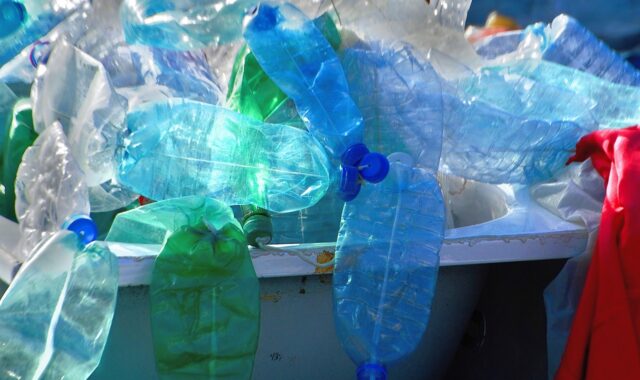
How material selection and processing shape plastic products
Plastic products are shaped by more than the resin name
Plastic products are not defined by a resin name alone. They come from three connected decisions: the polymer family, the conversion method and the design rules used to control strength, weight, surface finish, tolerances and end-of-life options. A polypropylene living hinge, an HDPE detergent bottle, a PVC pipe and a PET beverage container are all plastic products, but each is engineered around different limits. For processors, buyers and product teams, the practical question is not simply which plastic is cheapest. It is which resin-process combination can meet the required performance while remaining manufacturable, compliant and easier to recover after use.
In standards language, plastics are polymer-based materials that can be shaped during processing. That broad definition is useful because it keeps attention on the finished article, not just the chemistry. Heat history, cooling rate, mold or die design, wall thickness, additives, fillers, orientation and trimming can all influence the final part. This is why two products made from the same resin family may perform differently in impact strength, stiffness, clarity, chemical resistance or dimensional stability.
For more context on forming, molding and material conversion topics, see the Plastic Processing section.
Common resin families and where they fit
The resin family sets the starting point for product design. Commodity thermoplastics such as PE, PP, PVC, PET and PS dominate many packaging, construction and consumer goods applications because they can be melted, shaped and cooled repeatedly. Engineering plastics such as ABS, polycarbonate, nylon and acetal are selected when strength, heat resistance, dimensional control or wear performance are more important than the lowest material cost.
Recent public data also show why resin definitions matter. OECD reported that global plastics production reached 460 million tonnes in 2019 under its lifecycle accounting scope, while Plastics Europe reported 413.8 million tonnes of world plastics production for 2023 under a different scope focused on plastics used in the conversion of parts and products. These figures should not be compared as if they were identical datasets; they use different boundaries. The useful takeaway is that plastics remain a very large material system, so small design decisions can scale into major material, waste and recovery impacts.
| Resin family | Typical plastic products | Common processing route | Key design check |
|---|---|---|---|
| PET | Beverage bottles, food containers, trays, fibers in some applications | Injection molding, stretch blow molding, thermoforming | Moisture control, clarity, barrier needs and food-contact rules |
| HDPE | Milk jugs, detergent bottles, caps, crates, pipes | Blow molding, injection molding, extrusion | Environmental stress cracking, stiffness and wall distribution |
| LDPE and LLDPE | Films, bags, liners, flexible packaging, squeeze products | Film extrusion, extrusion coating, blow molding | Sealability, puncture resistance and thickness control |
| PP | Food containers, closures, living hinges, automotive parts, medical and consumer items | Injection molding, extrusion, thermoforming | Heat resistance, hinge fatigue, shrinkage and impact modification |
| PVC | Pipes, profiles, flooring, cable insulation, medical tubing in controlled uses | Extrusion, calendaring, injection molding | Stabilizer package, flexibility, outdoor weathering and regulatory fit |
| PS and EPS | Rigid packaging, trays, cups, insulation foam, protective packaging | Injection molding, extrusion, foam molding, thermoforming | Brittleness, insulation value, food-contact limits and recovery route |
| ABS, PC, PA and other engineering plastics | Housings, gears, clips, electrical parts, tools, automotive components | Injection molding, extrusion, machining from stock shapes | Dimensional accuracy, heat exposure, flame rating and moisture sensitivity |
Processing method controls shape, economics and quality
Material selection and processing cannot be separated. A resin may look suitable on a datasheet but fail in production if the chosen process cannot fill thin walls, hold tolerances, cool evenly or avoid degradation. The same part concept may also require different tooling, cycle time and quality controls depending on whether it is molded, extruded, blown or formed from sheet.
Injection molding
Injection molding is widely used for complex three-dimensional plastic products such as housings, caps, clips, containers, appliance parts and technical components. Pellets are melted and injected into a closed mold, then cooled before ejection. Its main advantage is repeatability at scale. Its main limitation is the cost and lead time of precision tooling. For high-volume products, mold investment can be justified by fast cycles and low unit cost. For low-volume products or frequently changing designs, the economics may be less favorable.
Design details have a large effect on molded part quality. Uniform wall thickness helps reduce sink marks and warpage. Draft angles support clean ejection. Gate location influences flow lines, weld lines and fiber orientation. Ribs can add stiffness without simply making walls thicker, but poorly designed ribs may create cosmetic defects or stress concentration.
Extrusion
Extrusion is used when the product has a continuous cross-section, such as pipe, tubing, sheet, film, profiles, cable insulation or seals. The material is melted in a screw extruder and forced through a die. Downstream cooling, sizing, pulling and cutting determine the final dimensions. In film and sheet, gauge control is critical because small thickness changes affect cost, strength and converting performance.
Extrusion is often efficient for long runs, but die design and process stability are crucial. Poor melt temperature control can cause gels, surface defects or inconsistent mechanical properties. For multilayer films or barrier products, co-extrusion can combine functions, but it may complicate recycling if the layers cannot be separated or compatibilized.
Blow molding and thermoforming
Blow molding is used for hollow plastic products such as bottles, drums, tanks and some technical ducts. The core challenge is wall distribution. Too much material in one area adds cost, while too little material near corners, handles or pinch-off zones can reduce strength. Stretch blow molding, often associated with PET beverage bottles, uses orientation to improve strength and clarity in thin-walled containers.
Thermoforming starts with plastic sheet that is heated, formed over or into a mold, and trimmed. It is common for trays, lids, clamshells, refrigerator liners and medical packaging. Tooling can be less expensive than injection molding for some applications, but formed parts often have uneven wall thickness because the sheet stretches during forming. Trim scrap must also be managed, especially in high-volume packaging operations.
Design choices that determine performance
Good plastic product design starts with the use condition, not the resin catalog. A part may need to survive heat, cold, sunlight, cleaning chemicals, repeated bending, load-bearing stress or food contact. Each condition changes the material and processing requirements. For example, a container that performs well at room temperature may become brittle in cold distribution. A housing that looks rigid during assembly may creep under long-term load. A transparent part may need UV protection if used outdoors.
Several practical design choices repeatedly influence success:
- Wall thickness: Thick walls can increase cooling time and cause sink marks, while walls that are too thin may not fill properly or may lack stiffness.
- Radii and corners: Sharp corners concentrate stress. Rounded transitions improve flow and reduce cracking risk.
- Ribs and bosses: These features add function but must be proportioned to avoid sink, voids and weak weld lines.
- Shrinkage allowance: Different resins shrink at different rates. Crystalline materials such as PE and PP generally require careful dimensional compensation.
- Additives and fillers: Colorants, glass fiber, flame retardants, UV stabilizers, slip agents and impact modifiers can improve one property while changing flow, appearance or recyclability.
- Joining method: Snap-fits, ultrasonic welding, heat staking, adhesives and screws each introduce different stress and disassembly issues.
The most robust projects treat design for manufacturing as early engineering work, not as a final tooling correction. Once steel is cut for a mold or a die is built for extrusion, even small geometry changes can become expensive. See also: Buying Guides.
Recyclability and recycled content are now design requirements
End-of-life performance is becoming part of the specification for many plastic products, especially packaging. OECD reported that only 9 percent of plastic waste was ultimately recycled in 2019 after accounting for recycling losses. Plastics Europe estimated that post-consumer mechanically recycled plastics represented 8.7 percent of 2023 world plastics production under its reporting scope, while chemically recycled plastics remained a very small share. These figures point to a practical constraint: recyclability is not just a label claim; it depends on collection, sorting, material compatibility, contamination and demand for the recycled output.
Design for recyclability usually favors mono-material structures, separable components, compatible labels and adhesives, limited use of problematic colors, and additives that do not block recovery. A resin identification code may help identify the polymer family, but it does not prove that a product will be accepted or recycled in a specific local system. Claims such as recyclable, compostable or biodegradable also need to match the legal and infrastructure context of the market where the product is sold.
Regulatory pressure is making this more concrete. In the European Union, Regulation (EU) 2025/40 on packaging and packaging waste entered into force in February 2025 and generally applies from 12 August 2026. It sets a direction toward recyclable packaging by 2030 and includes recycled content requirements for plastic packaging with increasing targets for 2030 and 2040. Outside Europe, many jurisdictions are also tightening rules on environmental claims, labeling and single-use items. The direction is clear even where details differ: products that ignore recovery, labeling and recycled-content feasibility are exposed to higher redesign risk.
A practical selection framework for plastic products
Teams comparing materials and processes can avoid many mistakes by using a structured decision path. The framework below is simple, but it captures the trade-offs that determine whether a plastic product can move from concept to stable production.
- Define the function: Identify load, temperature, chemical exposure, impact, appearance, barrier needs, food-contact requirements and expected life.
- Choose candidate resin families: Start with materials that meet the performance envelope before optimizing for price.
- Match the process to the geometry: Use injection molding for complex solid parts, extrusion for continuous shapes, blow molding for hollow products and thermoforming for sheet-based parts.
- Check manufacturability early: Review wall thickness, draft, ribs, gates, cooling, trimming, tolerances and assembly features before tooling.
- Assess compliance: Confirm food-contact, medical, electrical, flame, chemical and market-specific labeling rules where applicable.
- Evaluate recovery options: Consider mono-material design, recycled-content targets, disassembly, sorting, contamination and realistic recycling infrastructure.
- Validate with testing: Use prototype and production-intent testing to confirm impact, creep, sealing, aging, dimensional stability and appearance.
This approach helps prevent a common error: choosing the lowest-cost resin first and forcing the process and design to compensate later. In many projects, the lowest total cost comes from a resin-process-design combination that reduces scrap, shortens cycles, improves quality consistency and avoids future compliance redesigns.
Frequently asked questions
What are plastic products?
Plastic products are finished or semi-finished items made from polymer-based materials that are shaped through processes such as molding, extrusion, blow molding, thermoforming, calendaring or machining. The term covers both disposable items and durable goods, including packaging, pipes, housings, films, medical components, automotive parts and consumer products.
Which plastic processing method is most common?
There is no single method for all products. Injection molding is common for complex high-volume parts, extrusion is common for pipe, film, sheet and profiles, blow molding is used for hollow containers, and thermoforming is used for sheet-based packaging and liners. The right method depends on geometry, volume, tooling budget and material behavior.
Does a resin code mean a plastic product is recyclable?
No. A resin code identifies the plastic family, such as PET, HDPE or PP. It does not guarantee that the item is accepted by a local recycling program or that it can be economically recycled. Shape, color, additives, labels, contamination and local infrastructure all matter.
How can manufacturers make plastic products easier to recycle?
They can use mono-material designs where possible, avoid unnecessary multilayer structures, select compatible closures and labels, reduce hard-to-sort colors, design parts for disassembly and verify that the target market has a realistic collection and recycling route. Recyclability should be checked during design, not after launch.
Why do similar plastic products have different quality levels?
Differences can come from resin grade, additives, drying, melt temperature, mold or die design, cooling rate, wall thickness, process control and quality inspection. Two products with the same polymer abbreviation may perform differently if they use different grades or are processed under different conditions.
Final takeaway
Plastic products succeed when material, process and design are developed together. Resin selection defines the performance window, processing turns that material into a repeatable shape, and design choices determine strength, appearance, cost and recovery potential. As recycled content, labeling rules and circularity expectations become more important, the strongest product decisions will be those that balance engineering performance with manufacturability and credible end-of-life planning.