Fibre reinforced plastic explained for material selection and processing
What fibre reinforced plastic means in processing
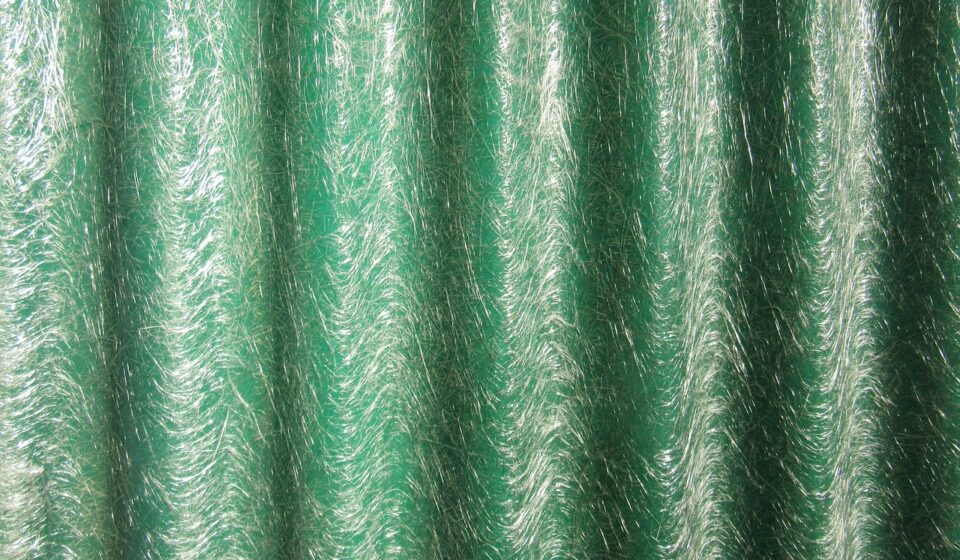
Fibre reinforced plastic, often shortened to FRP, is a composite material made by combining a polymer matrix with reinforcing fibres. The plastic resin gives the part its shape, surface, chemical resistance and load transfer between fibres. The fibres provide much of the stiffness and strength, especially in the direction in which they are aligned. For that reason, FRP cannot be selected by naming only a resin or only a fibre. A glass fibre polyester panel, a carbon fibre epoxy laminate and a long-glass-fibre polypropylene molding can all be called FRP, but they behave differently in production and in service.
For plastic processing teams, the practical point is that FRP performance is process-dependent. Fibre length, fibre orientation, resin wet-out, void content, cure or consolidation conditions and post-processing all affect the finished part. For related articles on plastics manufacturing and process selection, see Plastic Processing.
The main building blocks of FRP
Every fibre reinforced plastic part is built around three design choices: the matrix, the reinforcement and the fibre architecture. These choices are linked. A resin that works well in an open mold may not be suitable for high-temperature thermoplastic consolidation, and a fibre format designed for pultrusion may not suit a complex injection molded housing.
The polymer matrix
The matrix can be thermoset or thermoplastic. Common thermoset matrices include unsaturated polyester, vinyl ester, epoxy, phenolic and polyurethane systems. Thermosets cure by forming a crosslinked network, so they generally do not melt back into a flowable resin after cure. This can make them useful for dimensionally stable composite parts, but it also makes end-of-life recycling more difficult.
Thermoplastic matrices include polypropylene, polyamide, PET, polycarbonate, PPS, PEI, PEEK and other engineering polymers. They soften or melt when heated and solidify when cooled, which can support welding, reshaping or remelting in some applications. However, thermoplastic melts are usually more viscous than many liquid thermoset resins. Fully impregnating continuous fibres can therefore require higher temperature, pressure and process control.
The reinforcement
Glass fibre is the most common reinforcement because it balances cost, availability, stiffness and corrosion resistance for many industrial parts. Carbon fibre is selected where stiffness-to-weight ratio is critical, but it is usually more expensive and can introduce electrical conductivity considerations. Aramid fibre is valued for impact and abrasion resistance. Basalt, natural fibres and hybrids are used when a project needs different trade-offs in cost, density, sustainability or temperature resistance.
Fibre architecture
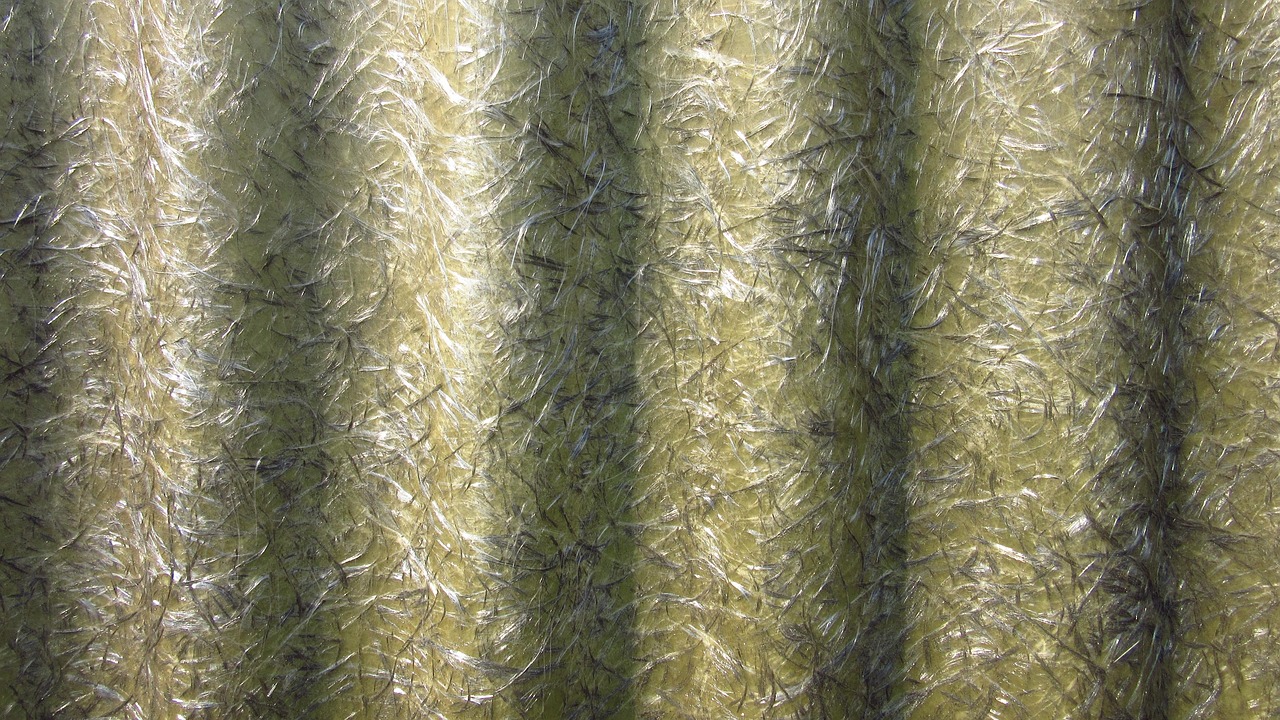
Fibre form is just as important as fibre type. Chopped strand mats and short fibres can give more balanced properties, but they normally cannot match the directional strength of continuous fibres. Woven fabrics improve handling and provide strength in two main directions. Unidirectional tapes or rovings can deliver high properties along a chosen load path, but they need careful laminate design because properties are much lower across the fibre direction. This directional behaviour is why FRP data sheets and ISO test methods distinguish between isotropic, orthotropic and unidirectional reinforced materials.
How processing method changes FRP performance
Processing is not only a way to make a shape; it is part of the material design. ISO 1268 guidance on producing test plates notes that the mechanical properties of reinforced plastics depend on the production method and recommends, where possible, preparing test plates by the same method that will be used for the final part. That principle matters in everyday material selection. A coupon made from a carefully consolidated laminate may not represent a spray-up part, and an injection molded short-fibre grade should not be compared directly with a continuous fibre prepreg.
| Process | Typical fit | Main processing limitation |
|---|---|---|
| Hand lay-up and spray-up | Large parts, low tooling cost, repair work and lower-volume production | Higher labor dependence, variable fibre content and greater need for emission and ventilation controls when styrene-containing resins are used |
| Resin transfer molding and vacuum infusion | Closed-mold parts needing better surface consistency and resin control | Requires careful permeability, vacuum integrity, resin viscosity and flow-front management |
| Compression molding of SMC or BMC | Repeatable medium- to high-volume parts such as covers, panels and electrical housings | Tooling investment, press capacity and flow orientation can influence properties |
| Pultrusion | Continuous profiles such as rods, channels, beams, ladders and cable trays | Best suited to constant cross-sections and fibre-dominated lengthwise properties |
| Filament winding | Pipes, pressure vessels, tanks and cylindrical structures | Geometry is usually axisymmetric, and performance depends heavily on winding angle |
| Short- or long-fibre thermoplastic molding | Complex shapes, clips, brackets, housings and automotive components | Fibre breakage and fibre orientation during flow can create uneven properties |
Open-mold thermoset processing remains useful because it is flexible, especially for large or complex parts. Its weakness is consistency. Resin-rich areas, dry fibre, trapped air and inconsistent consolidation can reduce strength and fatigue performance. Closed-mold processes such as resin transfer molding and vacuum infusion can improve repeatability by controlling resin flow and reducing exposure to open resin surfaces, but they require more design work before production starts.
In thermoplastic FRP, the processing challenge often shifts from cure chemistry to heat transfer, melt flow and consolidation pressure. The material may offer faster cycle potential and easier joining, but high fibre loading can raise melt viscosity and make complete wet-out difficult. For processors familiar with unfilled plastics, this is a significant adjustment: the melt no longer behaves like a simple polymer.
Thermoset versus thermoplastic FRP
The choice between thermoset and thermoplastic FRP should be based on service temperature, cycle time, part geometry, tooling, joining, chemical exposure, repair and end-of-life plans. Neither family is automatically better. Thermosets often provide good fibre wet-out, stable cured shape and a wide range of established composite manufacturing routes. They are common in marine, construction, corrosion-resistant equipment and many structural composite parts.
Thermoplastic FRP can be attractive where impact toughness, weldability, shorter forming cycles or recyclability are important. It is widely used in short-fibre and long-fibre injection molding, and it is also growing in continuous fibre tapes and organosheets. The trade-off is that processing windows can be narrow. Temperature must be high enough for flow and consolidation, but not so high that the polymer degrades. Cooling rate can affect crystallinity and final dimensions in semi-crystalline polymers such as polypropylene, polyamide, PPS and PEEK.
For specification work, avoid broad labels such as “fibreglass” or “carbon composite” unless they are backed by the resin system, fibre type, fibre content, fibre orientation, process route and test standard. Two FRP parts with the same fibre and resin can still perform differently if one has better consolidation or a more suitable fibre lay-up.
Where fibre reinforced plastic is used
FRP is selected when a processor or designer needs a combination of low weight, stiffness, corrosion resistance and shape flexibility that an unreinforced plastic or metal cannot easily provide. Common applications include corrosion-resistant tanks and ducting, marine hulls, vehicle panels, rail components, electrical enclosures, construction profiles, bridge elements, sports equipment, wind energy components and aerospace structures.
The advantage is rarely one property alone. In a chemical handling environment, corrosion resistance may matter more than weight. In transport, weight reduction is useful only if fatigue, impact and fire requirements are also met. In infrastructure, low maintenance and electrical insulation may justify FRP profiles even when the initial material cost is higher than conventional materials. This is why FRP selection should start with the service environment, not with a preferred material name. See also: Buying Guides.
| Application need | Why FRP may be considered | What must be verified |
|---|---|---|
| Corrosion resistance | Resin-rich surfaces and suitable matrices can resist many chemicals | Chemical compatibility, temperature, permeation and joint details |
| Lightweight structure | Continuous fibres can provide high stiffness and strength per unit weight | Load direction, laminate schedule, impact tolerance and fatigue |
| Electrical insulation | Glass fibre composites can be non-conductive when designed correctly | Moisture exposure, surface tracking, fillers and certification needs |
| High-volume molded parts | Fibre-filled thermoplastics or SMC can combine reinforcement with molding productivity | Fibre orientation, warpage, weld lines and dimensional tolerance |
| Complex curved forms | Lay-up, infusion and molding processes can form shapes that are difficult to machine from metal | Tooling quality, surface finish, thickness control and inspection method |
Testing, quality control and safety considerations
FRP testing should match the part’s actual loading condition. ISO 527-4:2023 covers tensile test conditions for isotropic and orthotropic fibre-reinforced plastic composites, while ISO 527-5 applies to unidirectional reinforced plastics. Flexural, compressive, shear, fatigue, impact and environmental aging tests may also be needed, depending on the application. A single tensile value is not enough for a safety-critical or long-life component.
Quality control must also look beyond final dimensions. Important checks may include fibre weight or volume fraction, resin mix ratio, cure degree, void content, glass transition temperature, laminate thickness, fibre orientation, surface defects and bond quality. For thermoplastic FRP, processors may also monitor moisture content before molding, melt temperature, mold temperature, pressure history and cooling rate. In continuous fibre processes, incomplete impregnation and trapped air can create defects that are not obvious from the outside.
Health, safety and environmental controls should be planned early. Public OSHA materials state that there are no substance-specific OSHA health standards for composites as a category, but general requirements such as ventilation, hazard communication, respiratory protection and personal protective equipment may apply depending on materials and operations. In the United States, the EPA reinforced plastic composites NESHAP applies to certain production facilities using thermoset resins or gel coats that contain styrene and regulates hazardous air pollutants associated with those operations. In practice, resin choice and process choice can affect not only part quality but also plant ventilation, worker exposure, permitting and waste management.
End-of-life and recycling limits
FRP recycling is technically possible, but it is not as simple as recycling an unfilled thermoplastic stream. Thermoset composites are difficult because the cured matrix does not melt. Current routes discussed in industry and academic reviews include mechanical size reduction for filler use, cement kiln co-processing, pyrolysis, solvolysis and energy recovery. Each route has trade-offs in fibre value retention, contamination, energy demand and economics.
Thermoplastic FRP has a clearer path to remelting than thermoset FRP, but it still faces practical limits. Fibres may break during grinding and remolding, additives may complicate sorting, and mixed fibre or mixed polymer streams can reduce value. Long-fibre and continuous-fibre thermoplastic composites are therefore not automatically circular; they need design for disassembly, material identification and realistic recovery routes.
For processors, end-of-life thinking should begin at the specification stage. If a part is large, long-lived or regulated, ask whether the resin, fibre, coating and inserts can be separated or whether the composite will become a mixed-material waste problem. This is especially important for infrastructure, marine and energy applications where service life can be measured in decades.
A practical selection checklist
Before choosing a fibre reinforced plastic system, define the real load case. Is the part mainly in tension, bending, compression, torsion, impact or fatigue? Are loads mostly in one direction or multi-directional? Next, define the environment: temperature, moisture, UV exposure, chemicals, fire requirements and electrical behavior. Only then should the fibre, resin and process be selected.
- Specify the resin family, grade and cure or melt-processing conditions.
- Specify fibre type, fibre length, fibre format, orientation and target fibre content.
- Choose a process that can achieve the required wet-out, consolidation and repeatability.
- Use test methods that reflect the real part and the expected loading direction.
- Plan inspection methods for voids, delamination, fibre misalignment and surface defects.
- Review worker exposure, ventilation, emissions and waste obligations before production.
- Consider repair, joining and end-of-life routes before tooling is finalized.
The most common mistake is treating FRP as a stronger version of ordinary plastic. It is better understood as an engineered composite system. When fibre, resin and processing are aligned, FRP can deliver a useful mix of mechanical performance, corrosion resistance and design freedom. When they are not aligned, the result may be an expensive part with unpredictable properties.
Frequently asked questions
Is fibre reinforced plastic the same as fibreglass?
Not exactly. Fibreglass usually refers to glass fibre reinforced plastic, which is one major type of FRP. Fibre reinforced plastic also includes carbon fibre, aramid fibre, basalt fibre, natural fibre and hybrid reinforced systems.
Is FRP stronger than normal plastic?
FRP can be much stiffer and stronger than an unreinforced plastic in the fibre direction, but it is not automatically stronger in every direction or under every type of load. Fibre orientation, fibre length, resin adhesion, void content and processing quality determine the final performance.
Can fibre reinforced plastic be injection molded?
Yes. Many short-fibre and long-fibre thermoplastic compounds are injection molded. Continuous fibre FRP is usually processed by other methods such as lay-up, compression molding, pultrusion, filament winding, tape placement or thermoforming of reinforced sheets.
Why is recycling FRP difficult?
FRP combines fibres, polymer matrix, additives and sometimes coatings or inserts. Thermoset FRP is especially difficult because the cured resin does not remelt. Thermoplastic FRP can be more recyclable, but fibre breakage, mixed materials and sorting challenges still affect recovered value.