How to store polyvinyl chloride materials without heat, UV, or deformation damage
What good PVC storage needs to accomplish
Polyvinyl chloride, usually called PVC, is a durable thermoplastic, but storage conditions still affect its condition before fabrication, installation, resale, or use. The purpose of storage is not to keep PVC “fresh” like food or reactive chemicals. It is to prevent avoidable damage: heat distortion, ultraviolet discoloration, surface scratching, pipe bending, plasticizer migration in flexible items, contamination, and mix-ups with non-PVC plastics.
For most fabricated PVC products, the safest approach is straightforward. Store the material indoors when possible, keep it out of direct sunlight, protect it from heat sources, support it across its length or surface, and keep it away from oils, solvents, sharp objects, and heavy loads.
This article focuses on practical care and storage for PVC sheets, pipes, profiles, panels, tubing, films, and flexible vinyl goods. For broader plastics handling topics, see our care and storage guidance.
Why polyvinyl chloride storage is different from generic plastic storage
PVC is not one single material in day-to-day industrial use. It is a base polymer compounded with additives to meet specific performance requirements. Rigid PVC is used for pipe, sheet, conduit, window profiles, and panels. Flexible PVC is used for tubing, flooring, membranes, cable insulation, film, and coated fabrics. Public technical summaries from organizations such as the U.S. Environmental Protection Agency, ASTM International, and European PVC industry bodies describe PVC as a resin that can be made rigid or flexible depending on its additive package.
That difference changes the storage priorities. Rigid PVC mainly needs protection from warping, impact, sunlight, heat build-up, and contamination. Flexible PVC also needs attention to plasticizer migration, blocking between layers, surface tack, staining, and contact with absorbent or incompatible materials. A storage method that is acceptable for rigid pipe may not be suitable for soft vinyl film or plasticized tubing.
Product geometry matters as well. A flat sheet can bow if it is stored upright without adequate backing. Pipe can ovalize if it is stacked too high or supported only at a few points. Thin film can crease, stick to itself, or transfer printed ink. Profiles can twist if they heat unevenly. PVC storage should therefore be based on both the compound type and the shape of the finished article.
The core risks to control during storage
The table below summarizes the main storage risks and the control measures that usually matter most in warehouses, fabrication shops, and jobsite storage areas.
| Storage risk | Why it matters | Practical prevention |
|---|---|---|
| Direct sunlight and UV exposure | May cause discoloration, surface weathering, and heat build-up, especially during long outdoor storage. | Store indoors when possible; outdoors, use opaque covers that allow air circulation. |
| High heat | Can soften, warp, deform, or accelerate material changes, especially in enclosed spaces. | Keep away from heaters, boilers, exhaust, steam lines, closed vehicles, and sun-heated packaging. |
| Poor support | Can bend pipe, bow sheet, flatten rolls, or distort profiles. | Use flat pallets, racks, dunnage, or continuous support appropriate to the product shape. |
| Excessive stacking or point loading | Can deform lower layers, create pressure marks, or damage edges and bells. | Follow manufacturer stack-height limits; distribute weight evenly. |
| Scratching and abrasion | Can damage finished surfaces and create stress points before machining or installation. | Lift instead of dragging; keep protective interleaving or packaging where suitable. |
| Incompatible chemicals | Some solvents, oils, plasticizers, adhesives, and cleaners can stain, swell, embrittle, or soften PVC. | Store away from open chemicals and verify cleaner compatibility before use. |
Temperature and sunlight control
Heat is one of the most important storage variables for PVC. Finished PVC does not suddenly fail at ordinary warehouse temperatures, but prolonged or uneven heating can create avoidable problems. Dark packaging in sunlight, closed trailers, unventilated sheds, and stacked sheets under transparent film can become much hotter than the surrounding air. For thin panels, profiles, tubing, and flexible sheet, that heat can lead to warping, surface marks, or sticking.
Manufacturer handling guides for PVC pipe and panels commonly recommend indoor storage, or outdoor storage under an opaque cover. Ventilation is the key detail. A cover that blocks sunlight but traps heat can create a different problem. Use light-colored, opaque covers where possible, and leave enough space for air to move around the stack. Avoid black plastic sheeting for long-term outdoor storage because it can absorb heat.
Outdoor storage should be treated as temporary unless the material is designed and packaged for that exposure. If PVC products must remain outside, keep them off the ground, prevent water pooling, keep labels or batch information visible, and inspect the material before use. Discoloration alone does not always mean a product is unusable, but visible brittleness, cracking, distortion, or surface chalking should trigger a closer quality check.
Thermal degradation of PVC at high processing or fire temperatures involves dehydrochlorination, a reaction discussed in polymer science literature and government technical documents. Normal storage is not the same as processing or burning, but this chemistry is one reason unnecessary heat exposure should be avoided. PVC should also be kept away from open flames, welding sparks, and hot exhaust.
How to store rigid PVC sheet, pipe, and profiles
Rigid PVC sheet
Rigid PVC sheet should be stored flat on a clean, level, fully supported surface. Pallets or racks should prevent sagging across the sheet width. If sheets are stored vertically, use a broad backing panel and avoid steep leaning angles that can create long-term bow. Keep the surface protected from grit, as small particles trapped between sheets can scratch under weight.
If the sheet has masking film, confirm the supplier’s recommendation for how long that film can remain in place. Some protective films are intended for transport and short storage, not indefinite exposure. Heat and sunlight can make old masking difficult to remove or leave adhesive residue on the sheet.
PVC pipe and conduit
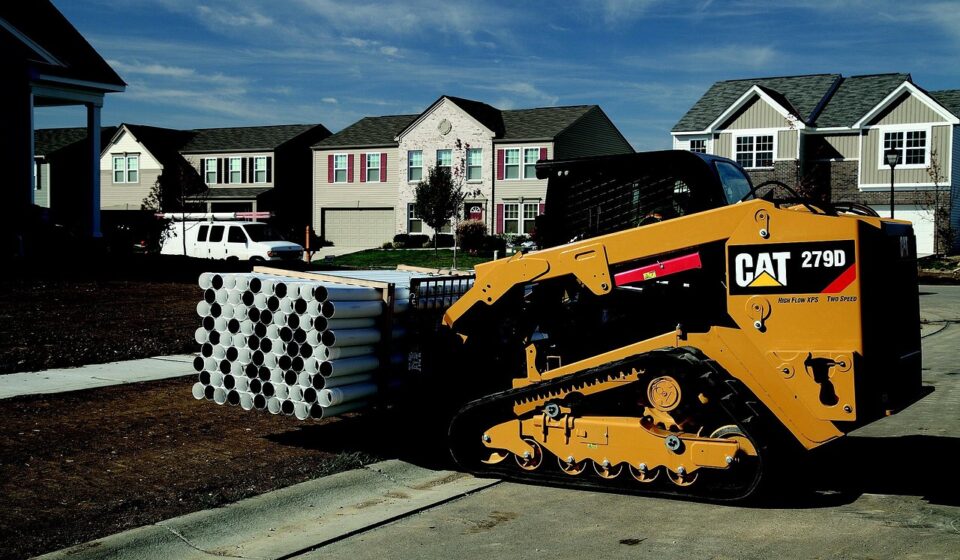
PVC pipe should be supported along its length with racks, sleepers, or dunnage spaced closely enough to prevent bending. Do not store pipe on sharp stones, uneven ground, or narrow supports that create point loads. Bell ends should be protected and arranged so the stack remains level. Larger and heavier pipe should be placed at the bottom, with lighter sizes above.
Pipe stacks should not be high enough to deform the lower layers. Straps and bands should secure the load without crushing it. During unloading, pipe should be lifted or supported, not thrown from trucks or dragged across abrasive surfaces. In practice, most storage damage is mechanical rather than chemical, so handling discipline matters.
PVC profiles and extrusions
Window profiles, trim, channels, and other extrusions need straight, even support. Long profiles can twist if one end is unsupported or if the bundle heats unevenly. Keep bundles aligned, avoid uneven banding pressure, and do not store heavy materials on top of finished extrusions. If profiles are wrapped, avoid leaving them in direct sun where the wrap can trap heat.
How to store flexible PVC and plasticized vinyl
Flexible PVC requires additional care because plasticizers and other additives help give the material its softness. Over time, and under unfavorable storage conditions, plasticizer can migrate toward the surface or into adjacent absorbent materials. Possible signs include tackiness, oily residue, staining, print transfer, stiffness, odor, or blocked layers that do not separate cleanly. See also: Buying Guides.
Store flexible PVC in a cool, dry, shaded place and keep it in its original packaging until needed. Rolls should be supported on cores or racks that prevent flattening. If rolls are stacked, avoid excessive pressure on the lower rolls. Films and sheets should not be stored in contact with paper, painted surfaces, polystyrene foam, rubber, or other materials unless the supplier confirms compatibility.
Flexible PVC used near archives, collectibles, medical-adjacent storage, or packaging deserves extra caution. Preservation guidance from institutions such as the Library of Congress often recommends avoiding PVC for long-term storage of sensitive collections because of additive migration and aging concerns. That does not mean every flexible PVC item is unsafe for its intended industrial use. It means PVC should not be assumed inert when it is touching valuable papers, photographs, fabrics, or coated surfaces for years.
Cleaning, handling, and inspection before use
Good storage also includes careful handling when material comes off the rack. Lift panels instead of dragging them. Use clean gloves for finished or glossy surfaces. Keep forklifts, slings, and clamps from cutting into edges. For pipe and profiles, protect ends and sockets from impact. For films, prevent creases and keep roll edges clean.
Cleaning should be conservative. Dust can usually be removed with a soft cloth or a mild soap solution followed by clean water. Avoid strong solvents unless the product manufacturer specifically approves them. Acetone, ketones, aromatic solvents, and some aggressive cleaners can attack many plastics, including some PVC compounds. If cleaning is required before bonding, printing, welding, or machining, test on scrap or an inconspicuous area first.
Before installation or fabrication, inspect PVC materials for:
- Warping, bowing, ovality, or twist.
- Cracks, chips, stress whitening, or impact marks.
- Surface discoloration, chalking, tackiness, or oily residue.
- Contamination by dirt, oil, adhesive, or foreign matter.
- Missing batch labels, pressure ratings, standards markings, or supplier documentation where required.
For pressure pipe, electrical conduit, safety-related parts, and regulated applications, visual inspection is not enough. Follow the applicable product standard, installation code, and manufacturer instructions. Storage damage can reduce confidence in performance even when the material still appears usable.
Segregation, labeling, and recycling considerations
Storage areas should keep PVC separated from other plastic families such as polyethylene, polypropylene, PET, ABS, and polycarbonate. This is especially important in fabrication shops and recycling streams because mixed plastics can cause processing problems. A clear label system should identify material type, grade, thickness or size, color, supplier, date received, and any special storage instructions.
PVC is commonly associated with resin identification code 3. ASTM guidance on resin identification makes an important distinction: a resin code identifies the plastic family; it does not guarantee that an item is recyclable in a local program. The EPA gives similar consumer-facing advice: check local recycling rules rather than assuming a triangle code means acceptance.
From a storage standpoint, the practical lesson is to separate scrap at the point of generation. Keep clean rigid PVC scrap apart from flexible PVC, coated fabrics, contaminated offcuts, adhesive-backed vinyl, and mixed assemblies. If material is intended for recycling or regrind, contamination control during storage is just as important as contamination control during processing.
A practical PVC storage checklist
- Store indoors whenever possible, in a cool, dry, ventilated area.
- Keep PVC away from direct sunlight, high heat, open flames, and hot equipment.
- Use opaque outdoor covers only when they allow air circulation.
- Support sheets flat and pipe along its length to prevent bending or sagging.
- Avoid excessive stack height, tight banding, and point loading.
- Keep surfaces clean and protected from grit, sharp edges, and abrasion.
- Separate rigid PVC, flexible PVC, and other plastics clearly.
- Protect flexible PVC from long-term contact with absorbent or incompatible materials.
- Use first-in, first-out inventory control where product age matters.
- Inspect material before fabrication, installation, or shipment.
Frequently asked questions
Can PVC be stored outside?
Yes, many PVC products can be stored outside temporarily, but they should be raised off the ground, protected from direct sunlight, supported properly, and covered with an opaque material that does not trap excessive heat. Long outdoor storage should follow the manufacturer’s instructions for that specific product.
Does sunlight ruin PVC immediately?
No. Short exposure during transport or installation does not automatically ruin PVC. The concern is prolonged exposure, especially when sunlight combines with heat build-up and poor ventilation. Look for discoloration, surface chalking, brittleness, deformation, or cracking before use.
Should PVC pipe be stored horizontally or vertically?
Horizontal storage is usually preferred for pipe because it allows support along the length and reduces bending. If vertical storage is used for short pieces, the pipe should be stable, protected from falling, and not loaded in a way that damages ends or sockets.
Is flexible PVC safe to store against paper or fabric?
Not for long periods unless compatibility is known. Flexible PVC can contain plasticizers that may migrate into absorbent materials, potentially causing staining, tackiness, or surface changes. Use suitable interleaving or a different storage material for sensitive papers, textiles, photographs, and collectibles.
Does the number 3 symbol mean PVC is recyclable?
No. The number 3 identifies the resin family as PVC, but it does not mean a local recycling program accepts it. Recycling acceptance depends on the product form, contamination level, local equipment, and market demand for that material stream.


