How to store and care for HDPE materials correctly

Start with the storage conditions that matter most
HDPE is valued because it is tough, lightweight, moisture resistant and chemically resilient. It still needs controlled storage when processing quality, service life or compliance matters. The basic approach is straightforward: keep HDPE clean, dry, shaded, well ventilated, properly supported and traceable. Avoid direct sunlight, excessive heat, rain exposure, sharp contact points, heavy point loads, incompatible chemicals and unknown previous contents. This applies to resin, sheet, molded packaging, pipe, fittings, drums and tanks. For more related material notes, visit the Care and Storage section.
Public guidance from standards bodies, regulators and material suppliers leads to the same practical point: HDPE usually tolerates normal handling well, but storage conditions can affect appearance, dimensions, cleanliness and long-term reliability. Resin identification code 2 identifies the polymer family. It does not prove that a part is automatically recyclable, food-contact compliant or suitable for chemical storage.

Why HDPE still needs controlled storage
HDPE stands for high-density polyethylene. Compared with many commodity plastics, it has good impact strength, low water absorption and broad resistance to many acids, bases and water-based solutions. Those properties explain its use in bottles, drums, cutting boards, geomembranes, pipe, fittings, tanks, crates and industrial packaging.
Performance still depends on grade, additives, processing history and end use. ASTM D4976, the standard specification for polyethylene plastics molding and extrusion materials, classifies polyethylene grades through measurable properties such as density, flow rate, tensile behavior, environmental stress-crack resistance and other tests. In practice, HDPE is not one universal material. A natural-color bottle, a black pressure pipe and a UV-stabilized outdoor tank may all be HDPE, but they are not interchangeable.
Storage matters because polymers can be affected over time by light, oxygen, heat, stress, contamination and chemical exposure. NIST research on HDPE photodegradation has used controlled ultraviolet exposure and temperatures including 30°C, 40°C and 50°C to quantify how light intensity and temperature influence degradation. The storage takeaway is not that ordinary indoor HDPE will quickly fail. It is that avoidable heat and UV exposure should be reduced when long-term performance is important.
Main risks to manage before storage
Most HDPE storage problems are preventable. A warehouse, converter or job-site checklist should focus on these risk areas.
- UV and direct sunlight: Unprotected sunlight can contribute to surface oxidation, chalking, discoloration and embrittlement, especially in non-black or non-UV-stabilized products.
- Heat and temperature cycling: Elevated temperatures can soften packaging, increase shrinkage or distortion in thin-wall parts, and accelerate aging. Several supplier documents for polyethylene resin recommend dry storage away from heat and direct sunlight, with conservative temperature guidance often below 50°C.
- Moisture and rain: HDPE itself is not considered hygroscopic in the same way as nylon or PET, but wet packaging, surface moisture, dirt and condensation can still create processing defects, sanitation issues and handling problems.
- Contamination: Dust, metal filings, mixed resins, lubricants, cleaning chemicals and residues from previous contents can reduce product quality or make the material unsuitable for sensitive use.
- Mechanical stress: Poor stacking, point loading, uneven supports, tight strapping and sharp pallet edges can bend sheets, ovalize pipe, deform bottles or create stress points in molded parts.
- Chemical mismatch: HDPE has broad chemical resistance, but not universal resistance. Strong oxidizers, some hydrocarbons, solvents or high-temperature chemical service may require grade-specific compatibility checks.
- Loss of traceability: Without labels, batch numbers, grade information and prior-use records, it becomes harder to confirm whether the material is suitable for processing, food contact, chemical storage or recycling.
Recommended storage by HDPE form
The right storage method depends on the form of HDPE and the intended use. Use the table as a practical starting point, then follow the original supplier data sheet, safety data sheet and application standard for the specific product.
| HDPE form | Main storage risk | Practical care and storage action |
|---|---|---|
| Resin pellets or compounds | Contamination, wet packaging, mixed grades and heat exposure | Keep bags, liners or boxes sealed until use. Store indoors in a dry, dust-controlled and ventilated area. Keep grade labels visible, and segregate regrind, virgin resin and different melt-flow grades. |
| Sheets, rods and machined blanks | Warping, scratches, point loading and surface contamination | Store flat on smooth supports or vertically in racks designed to prevent bending. Protect surfaces from grit, sharp objects and direct sunlight. Avoid leaning large sheets at steep, unsupported angles. |
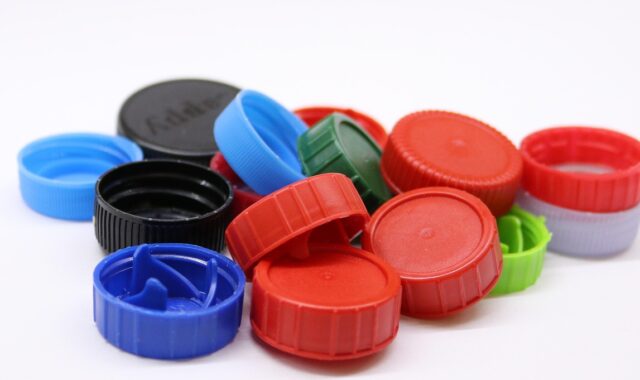
| Bottles, caps and molded containers | Distortion, odor pickup, contamination and unknown prior contents | Keep cartons closed, dry and away from heat. Do not compress thin-wall containers under heavy loads. For reuse, verify original contents, cleaning method and the intended application. |
| Pipe and fittings | Ovality, bending, impact damage and outdoor weathering | Store on level ground or racks with broad support. Segregate by size, pressure rating and wall thickness. Brace stacks against rolling, and protect machined or fusion surfaces from dirt and damage. |
| Drums, bins and tanks | UV exposure, chemical incompatibility, stress cracking and residue | Store empty units clean, closed and shaded where practical. Confirm chemical compatibility before service. Inspect threads, closures, welds, corners and molded stress points before reuse. |
Handling practices that prevent avoidable damage
HDPE is forgiving, but careless handling can create defects that only become visible later. Before moving stock, identify whether the item is a raw material, finished component, pressure-rated product, food-contact article or chemical-storage article. The higher the consequence of failure, the stricter the handling discipline should be.
- Lift pallets and crates from their designed lift points, not from unsupported edges.
- Use wide slings or padded handling equipment for large sheets, pipe and tanks.
- Do not drag HDPE pipe, sheets or containers across abrasive floors if the surface will later be welded, sealed or used in sanitary service.
- Keep fusion faces, threads, cap liners, gasket areas and sealing surfaces covered until needed.
- Avoid mixing HDPE with PVC, PET, PP or unknown plastic scrap unless the stream is intentionally sorted and identified.
- Rotate stock using first-in, first-out practice when color, appearance, packaging condition or processing consistency is important.
For resin pellets, the main care issue is usually cleanliness rather than absorbed moisture. PE grades are generally treated as non-hygroscopic, so aggressive drying is not normally required in the same way it may be for hygroscopic engineering plastics. Pellets with surface condensation, torn bags or dust contamination should still be handled cautiously because water droplets and dirt can cause processing defects or product rejects.
Inspection checklist before use or reuse
Inspection should be visual, tactile and application-specific. A low-risk storage bin may only need a quick check. A chemical drum, pipe fitting or food-contact container requires closer evaluation. Look for changes that suggest heat, UV exposure, impact, chemical attack or contamination.
- Appearance: Check for yellowing, whitening, chalking, unusual gloss changes, stains or embedded dirt.
- Shape: Look for warping, shrinkage, ovality, swelling, denting, buckling or permanent deformation.
- Surface condition: Inspect for cracks, scratches, gouges, brittle edges, crazing, pinholes or worn threads.
- Odor and residue: Treat strong odors, oily films, powders or unknown residues as warning signs, especially for reuse.
- Labels and traceability: Confirm resin grade, batch, production date, previous contents, pressure rating or food-contact documentation when relevant.
- Fit and function: Test closures, gaskets, mating parts, weld surfaces and threaded connections before returning parts to service.
If the application involves pressure, food, potable water, regulated packaging, hazardous chemicals or public safety, do not rely on appearance alone. Use the applicable standard, supplier documentation and compatibility data before approving the item.
Food-contact, chemical storage and reuse limits
A common mistake is treating all HDPE as food safe because the material is widely used in milk jugs and food packaging. That assumption is too broad. Food-contact suitability depends on the specific resin, additives, manufacturing controls, colorants, recycled content, previous contents and regulatory status. FDA guidance on recycled plastics in food packaging, updated in July 2021, emphasizes concerns such as contaminants in post-consumer recycled material, materials not regulated for food-contact use and adjuvants that may not comply with food-contact requirements.
The same caution applies to chemical storage. HDPE often performs well with many aqueous chemicals, but compatibility changes with concentration, temperature, exposure time, stress, fittings, gaskets and the exact resin grade. A tank rated for one chemical should not automatically be reused for another. Strong oxidizing chemicals are a special concern, and safety data sheets for HDPE commonly advise avoiding incompatible materials and heat sources. See also: Buying Guides.
For any reused HDPE container, three questions are essential: What was stored in it before? Can it be cleaned and verified for the new use? Is the container grade and design suitable for the new contents? If those questions cannot be answered, reuse should be limited to low-risk, non-food and non-hazardous applications.
Shelf life and outdoor exposure should not be guessed
HDPE does not have one universal shelf life. A sealed bag of resin, an outdoor-rated black pipe, a natural-color container and a fabricated tank have different risk profiles. Some polyethylene supplier data sheets advise processing resin within a defined period after delivery, such as six months, and storing it below 50°C in dry conditions. Treat those statements as supplier-specific handling guidance, not as a universal expiration date for all HDPE.
Outdoor storage also depends on formulation. Industry guidance from the Plastics Pipe Institute notes that black HDPE pipe generally contains more than 2% carbon black and has strong sunlight resistance, while non-black products may have more limited unprotected outdoor storage unless the manufacturer states otherwise. The key point is that color and additives matter. Natural or lightly colored HDPE without UV stabilization should not be stored outdoors for long periods simply because another black HDPE product performs well outside.
When in doubt, protect the material. Shade, ventilated covers, stable supports and clean packaging usually cost less than rejected parts, uncertain reuse or premature field failure.
Frequently asked questions
Does HDPE need to be dried before processing?
HDPE is generally considered non-hygroscopic, so it does not usually need the intensive pre-drying required by moisture-sensitive plastics such as nylon or PET. However, surface moisture from rain, condensation or wet packaging should be removed because it can affect processing quality and appearance.
Can HDPE be stored outside?
Some HDPE products are designed for outdoor use, especially black or UV-stabilized pipe, tanks and geomembranes. Other HDPE items should be shaded or covered. Outdoor storage decisions should be based on the product grade, color, additive package, supplier guidance and expected storage time.
Does the number 2 mark mean HDPE is recyclable?
The number 2 resin identification code means the item is made from HDPE. It does not guarantee that a local recycling program accepts that exact item. Shape, color, labels, contamination, additives and local sorting capability can all affect recyclability.
Is all HDPE food safe?
No. HDPE can be used in food-contact articles, but only specific materials and articles are suitable for that purpose. Food-contact suitability depends on resin approval, additives, manufacturing controls, recycled content and previous use. Never assume an unknown HDPE drum, bucket or bottle is safe for food or drinking water.
When should stored HDPE be rejected?
Reject or downgrade HDPE when it shows severe warping, cracks, brittleness, heavy UV chalking, unknown chemical residue, strong odor, missing traceability or damage to critical sealing and joining surfaces. For pressure, food-contact or chemical applications, uncertain material should not be used without further verification.