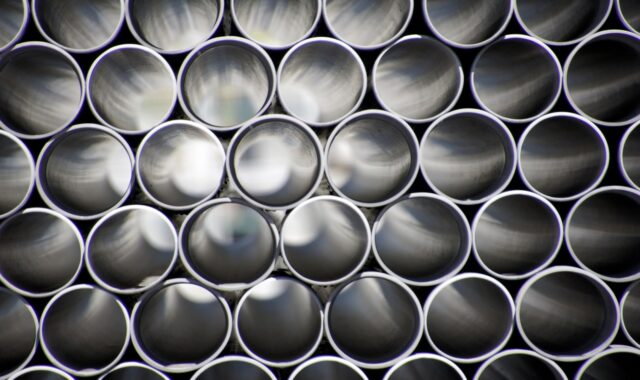
Fiberglass reinforced plastic buying guide for material selection

What fiberglass reinforced plastic is
Fiberglass reinforced plastic, commonly shortened to FRP, is not a single plastic grade. It is a composite material made from glass fiber reinforcement and a polymer resin matrix. The glass fiber carries much of the load. The resin binds the fibers, transfers stress, protects the reinforcement, and provides chemical and environmental resistance. For purchasing and engineering teams, FRP should be specified as an engineered material system, not ordered only by thickness, color, or part shape.
FRP is often considered when a project needs corrosion resistance, lower weight than many metals, electrical insulation, molded geometry, or reduced maintenance in wet or chemical environments. It can be a strong fit for tanks, pipe, grating, enclosures, panels, ducting, marine parts, wastewater components, and selected infrastructure applications. It is less suitable when chemical exposure is poorly defined, continuous service temperature is high, fire-smoke requirements are strict, impact risk is severe, or structural loads have not been confirmed through design and testing.
If you are comparing FRP with other plastic materials, see more practical material selection topics in our buying guides.
Why buyers choose FRP
The American Composites Manufacturers Association and its CompositesLab education materials describe the major benefits of composites as strength, light weight, corrosion resistance, design flexibility, and durability. These advantages explain why FRP is used in harsh industrial and outdoor environments. In practice, however, each benefit depends on the resin, fiber architecture, manufacturing process, and quality control used for the finished part.
Corrosion resistance is usually the main driver
In many industrial purchases, FRP is selected because steel, aluminum, or unreinforced plastics may not provide the same balance of chemical resistance and mechanical performance. Chemical tanks, scrubbers, wastewater covers, ladders, platforms, and pipe systems often face moisture, salts, acids, alkalis, or process chemicals. In these applications, resin selection matters as much as reinforcement. A general-purpose polyester laminate and a vinyl ester corrosion-resistant laminate should not be treated as interchangeable.
Weight can lower installation burden
FRP parts are often lighter than comparable metal parts. Lower weight can reduce lifting requirements, simplify installation, and help in retrofits where access is limited. It does not mean the part will have the same stiffness as metal. Many FRP structures need careful deflection checks because stiffness, creep, connection design, and fiber direction can control performance before ultimate strength becomes the limiting factor.
Design flexibility can reduce part count
FRP can be molded, pultruded, filament wound, contact molded, or laminated into complex shapes. That allows designers to combine features that might otherwise require welding, fastening, or machining. This benefit is strongest when the part is designed for FRP from the start. Copying a metal design directly into composite form can increase cost or create weak details around holes, corners, and attachments.
Specify the material system before comparing quotes
A useful FRP quotation should identify the resin, reinforcement, process, laminate schedule or profile type, dimensions, tolerances, design basis, testing requirements, and service environment. A vague request such as “FRP tank” or “fiberglass panel” leaves too much room for suppliers to quote different materials and different performance levels.
| Specification item | What to define | Why it matters |
|---|---|---|
| Resin system | Polyester, vinyl ester, epoxy, phenolic, or another approved resin | Controls chemical resistance, temperature limit, fire behavior, shrinkage, and cost |
| Glass reinforcement | Chopped strand, mat, woven roving, continuous roving, fabric, or veil | Controls strength direction, surface durability, crack resistance, and process suitability |
| Manufacturing process | Hand lay-up, spray-up, pultrusion, filament winding, compression molding, resin transfer molding, or infusion | Affects fiber content, repeatability, geometry, cost, and mechanical properties |
| Service exposure | Chemicals, concentration, temperature, pressure, UV, moisture, abrasion, and cleaning method | Prevents under-specification and premature failure |
| Required standards | Applicable ASTM, AWWA, ASME, ISO, or project specifications | Provides a common basis for testing, inspection, and acceptance |
Resin choice is the first buying decision
Unsaturated polyester is commonly used for general-purpose FRP where cost efficiency and moderate performance are acceptable. Isophthalic polyester is often preferred over basic orthophthalic systems when better water and chemical resistance is needed. Vinyl ester is widely used for more demanding corrosion service because it generally offers better chemical resistance and toughness than many polyester systems. Epoxy is selected where mechanical performance, adhesion, fatigue behavior, or electrical properties are more important, although it usually costs more and may require tighter processing controls. Phenolic systems may be considered where fire, smoke, and toxicity requirements are central, but they should be specified with project-specific performance evidence.
Fiber direction decides real strength
FRP is often anisotropic, meaning its properties vary by direction. ACMA guidance on designing with composites notes that composite materials should be modeled and designed with their directional properties in mind. A pultruded profile with continuous fibers along its length can be strong in that direction, but it may behave differently across the profile or around drilled connections. A chopped strand laminate may be more uniform but less efficient for high directional loads. Buyers should ask for test data that reflects the actual product form, not only generic resin data.
Surface protection should not be an afterthought
Outdoor FRP may need UV-resistant gel coat, pigmentation, surfacing veil, coating, or a defined maintenance plan. In chemical service, the corrosion barrier or liner in direct contact with the media is often more critical than the structural laminate behind it. Cut edges, drilled holes, and field modifications can expose fibers or create paths for fluid ingress, so sealing instructions should be included in the purchase documentation.
How FRP compares with metal and unreinforced plastics
FRP sits between several material categories. It is not simply “strong plastic,” and it is not a drop-in metal replacement for every design. The comparison should focus on the application’s dominant failure risks.
- Compared with carbon steel: FRP often offers better corrosion resistance and lower weight, but steel may provide higher stiffness, easier welding, greater temperature capability, and more familiar code pathways.
- Compared with stainless steel: FRP may reduce cost or weight in some corrosive environments, but stainless steel can be preferable where fire exposure, impact, sanitation, or high-temperature cleaning is critical.
- Compared with PVC, PP, or PE: FRP can provide higher structural capacity and better dimensional stability for certain tanks, pipes, and equipment, but thermoplastics may be easier to weld, recycle, or use for simple chemical containment.
- Compared with carbon fiber composites: Glass fiber FRP is usually more economical and more common in industrial corrosion applications, while carbon fiber composites are chosen when very high stiffness-to-weight or strength-to-weight performance justifies the added cost.
The practical buying question is not whether FRP is universally better. It is whether FRP reduces the most expensive risks in the specific service environment, such as corrosion, handling weight, maintenance access, electrical conductivity, shape complexity, or replacement frequency.
Standards and test data to request
Standards help prevent misunderstandings between buyers, fabricators, engineers, and inspectors. They do not replace engineering judgment, but they create a more reliable basis for acceptance. ASTM D638 covers tensile testing for unreinforced and reinforced plastics using defined specimen conditions, while ASTM D3039/D3039M is often more relevant for polymer matrix composites with oriented fibers. ASTM C582 covers contact-molded reinforced thermosetting plastic laminates for corrosion-resistant tanks, piping, and equipment. For water and pipe applications, AWWA standards such as C950 for fiberglass pressure pipe and D121 for bolted aboveground thermosetting fiberglass-reinforced plastic panel-type tanks may be relevant, depending on the project scope.
Ask for product-specific data
Generic brochure values can help with early screening, but they should not be the only basis for a purchase. Ask whether test specimens were taken from actual production parts, flat plaques, molded coupons, or supplier-prepared samples. The answer matters because fiber content, cure, void level, surface layers, and process conditions can change performance.
Match the test to the risk
Tensile strength alone rarely tells the full story. Depending on the application, the buyer may need flexural properties, compressive properties, impact resistance, barcol hardness, glass content, burn performance, water absorption, chemical immersion data, pressure testing, leak testing, dimensional inspection, or long-term deflection data. For structural parts, connection testing can be as important as laminate testing. See also: Care and Storage.
Clarify acceptance criteria in writing
Before ordering, define what will be inspected and what counts as rejection. Common acceptance topics include thickness tolerance, surface finish, exposed fibers, cracks, dry spots, delamination, resin-rich areas, air voids, color consistency, hole location, flange flatness, and documentation. Without written acceptance criteria, delivery disputes often become subjective.
Safety, compliance, and lifecycle factors
FRP buying is not only about installed performance. Fabrication, installation, cutting, repair, fire behavior, and disposal can influence the total project risk. The U.S. Environmental Protection Agency’s reinforced plastic composites production rule identifies hazardous air pollutants associated with some production operations, including styrene, methyl methacrylate, and methylene chloride. OSHA also treats styrene exposure as an occupational safety topic. Buyers do not need to manage a supplier’s plant, but they should understand that resin chemistry and fabrication method can affect emissions, ventilation needs, worker protection, and site rules during installation or repair.
Fire performance must be specified, not assumed
Standard FRP can burn or produce smoke depending on resin, fillers, additives, and laminate construction. If the part is used in a building, tunnel, offshore platform, rail application, electrical enclosure, or occupied space, fire performance should be defined by the relevant code or project specification. Do not assume that a corrosion-resistant laminate automatically meets flame spread, smoke, or toxicity requirements.
Maintenance depends on exposure
FRP is often promoted as low maintenance, and in many corrosion environments that is a valid advantage. Inspection still matters. Outdoor parts may need checks for UV chalking, coating loss, exposed fibers, cracking around fasteners, impact damage, or water ingress. Chemical tanks and ducts may need periodic inspection of liners, nozzles, supports, and secondary containment. Maintenance planning is especially important when field drilling or modification is expected.
End-of-life planning is improving but remains application specific
Thermoset FRP is durable because the cured resin network does not melt like many thermoplastics. That same feature can make recycling more complex. Some markets are developing reuse, grinding, cement-kiln co-processing, and composite recycling options, but availability varies by region and material type. Buyers with sustainability targets should ask suppliers for take-back options, recycled content claims, documentation, and realistic end-of-life pathways instead of relying on broad environmental claims.
A practical FRP buying checklist
Use this checklist before requesting final pricing or approving a submittal:
- Define the exact service environment, including chemicals, concentration, temperature, pressure, UV exposure, abrasion, cleaning agents, and expected service life.
- Choose the resin system based on chemical, thermal, fire, and mechanical requirements rather than cost alone.
- Specify reinforcement type and fiber orientation where structural loads matter.
- Identify the manufacturing process and ask how it affects tolerances, repeatability, and surface finish.
- Require applicable standards and test methods in the purchase specification.
- Ask for product-specific mechanical, chemical, and quality-control data.
- Confirm connection details, supports, field drilling rules, and sealing methods.
- Define inspection points, acceptance criteria, and documentation before production starts.
- Review worker safety, fire performance, installation method, maintenance access, and end-of-life expectations.
The strongest FRP specification is usually the one that removes ambiguity. It tells suppliers what the part must survive, how performance will be measured, and which trade-offs are acceptable. That approach produces more meaningful quotations than asking several vendors to price a generic fiberglass part.
Frequently asked questions
Is fiberglass reinforced plastic the same as fiberglass?
In common industrial language, fiberglass often refers to the finished glass fiber reinforced plastic composite. Technically, glass fiber is the reinforcement, while fiberglass reinforced plastic is the composite made from glass fiber and resin. When buying, it is clearer to use FRP and specify the resin and reinforcement.
Which resin is best for FRP?
There is no single best resin. Polyester is often used for economical general-purpose parts, vinyl ester is common in stronger corrosion service, epoxy is used where mechanical or electrical performance is important, and phenolic may be used when fire-smoke behavior is a priority. The right resin depends on exposure, temperature, load, code requirements, and budget.
Can FRP replace steel?
FRP can replace steel in some corrosion, weight-sensitive, or electrically nonconductive applications, but it should not be treated as a direct substitution without engineering review. Differences in stiffness, fire behavior, temperature capability, connections, and long-term deflection must be checked.
What information should be included in an FRP RFQ?
A good RFQ should include drawings, dimensions, tolerances, service environment, resin preference or required chemical resistance, reinforcement requirements, standards, test methods, inspection criteria, installation conditions, and documentation requirements. If chemical service is involved, include the chemical name, concentration, temperature, exposure duration, and cleaning method.
Does FRP need UV protection outdoors?
Many outdoor FRP parts use gel coat, coatings, pigments, or surfacing veils to improve weathering performance. The need depends on resin type, appearance requirements, sunlight exposure, and expected service life. Outdoor use should always be stated clearly in the specification.