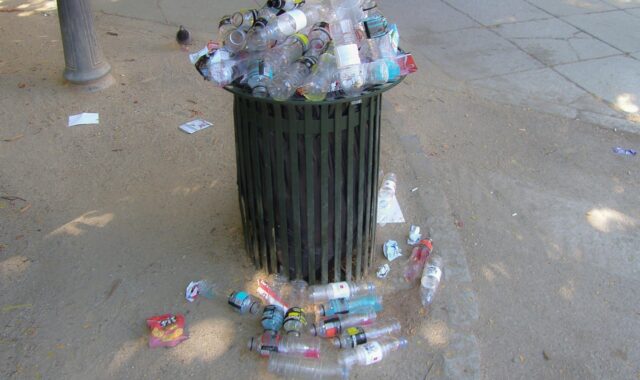
How the polymer industry is reshaping material selection for circular plastics

The polymer industry is changing how materials are selected. Price, stiffness, impact strength and processing speed still matter, but they are no longer enough. In packaging, automotive parts, consumer goods, electrical components and construction products, polymer choice now has to account for recycled-content targets, design-for-recycling rules, microplastics restrictions, carbon reporting and uncertainty around future plastic pollution policy. In practical terms, engineers and buyers need to compare polymers not only by how they perform in use, but also by how they are sourced, processed, identified, recovered and documented after use.
This article outlines the main forces behind that shift and offers a practical framework for teams making Polymer Selection decisions.
Why polymer selection is becoming more strategic
For many years, polymer selection followed a familiar sequence: define the mechanical requirements, check chemical and heat resistance, confirm processability, compare cost, then qualify a grade. That process still forms the technical backbone of material engineering. What it no longer captures fully is whether a material will remain viable across the product life cycle.
Public data shows the scale of the challenge. The OECD Global Plastics Outlook reported that global plastics production reached 460 million tonnes in 2019 and that only 9% of plastic waste was ultimately recycled after collection and recycling losses were considered. Plastics Europe, using a different industry scope focused on plastics used in converted products, reported 413.8 million tonnes of world plastics production in 2023 in its Plastics – the fast Facts 2024 dataset. These numbers are not directly interchangeable because the boundaries differ, but together they show that plastics remain a large global material system while recycling still lags far behind production.
That gap is making polymer choice a strategic decision. A resin may run well in the molding machine but still create risk if it is difficult to sort, incompatible with common recycling streams, dependent on restricted additives, or unable to meet a customer’s recycled-content target. At the same time, a familiar commodity polymer may become more attractive if it has reliable post-consumer recycled supply, established design guidelines and broad regional recycling infrastructure.
The main forces changing polymer decisions
Circular feedstock is becoming a design input
Recycled and bio-based materials are no longer treated only as sustainability add-ons. In many applications, they are being considered at the concept stage. Plastics Europe reported in 2026 that circular plastics represented 15.8% of Europe’s total plastics production in 2024, or 8.7 million tonnes, while also warning that growth in European circular production had slowed sharply. For buyers, that combination is important: demand is rising, but qualified supply can still be limited by polymer type, color, purity, food-contact status and regional availability.
Mechanical recycling is usually the first option to evaluate where consistent quality is available. It can be suitable for many polyethylene, polypropylene and PET applications, especially where color and odor requirements are manageable. Chemically recycled and mass-balance-attributed materials may support more demanding applications, but teams should examine certification, allocation method, regulatory acceptance and customer requirements carefully. Bio-based polymers can reduce reliance on fossil feedstock in some cases, but they do not automatically solve recyclability or end-of-life challenges.
Regulation is moving upstream into design
Regulation increasingly affects product design before a part is manufactured. In the European Union, the Packaging and Packaging Waste Regulation entered into force in February 2025 and began applying in phases from 12 August 2026. The European Commission has stated that all packaging must be recyclable by 2030 and that plastic packaging must include recycled content at increasing levels for 2030 and 2040. For companies selling into Europe, these requirements can influence material choices years before the compliance dates arrive.
Separate EU rules on intentionally added microplastics also affect some polymer-containing products. Commission Regulation (EU) 2023/2055 began applying on 17 October 2023 and restricts synthetic polymer microparticles placed on the market on their own or intentionally added to mixtures, with transitional periods and exemptions depending on the use. This does not mean every plastic article is restricted in the same way. It does mean formulators must understand whether powders, beads, encapsulated additives, glitter-like effects or other small polymer particles fall within the rule.
Global treaty uncertainty is affecting risk planning
The international policy picture is still evolving. UNEP reported that talks on a legally binding global instrument on plastic pollution adjourned on 15 August 2025 without consensus on a treaty text. For material selection, the lack of a final treaty does not remove risk; it keeps uncertainty in place. Areas debated in global policy discussions, including problematic products, product design, waste management, chemicals of concern and possible production-related measures, may continue to influence brand specifications, regional rules and investor expectations even before a global agreement is completed.
Processing reliability still determines whether a choice works
Circularity goals cannot override manufacturing reality. A polymer grade still has to run consistently in injection molding, extrusion, blow molding, thermoforming, compounding or additive manufacturing. Recycled-content grades may require tighter control of melt flow index, moisture, contamination, odor, color variation and mechanical property scatter. In engineering polymers, small changes in glass fiber loading, stabilizer package or molecular weight can affect warpage, weld-line strength, fatigue performance and long-term heat aging.
The better approach is not to replace engineering discipline with sustainability claims. It is to add circularity, compliance and documentation to the same qualification process already used for safety-critical and performance-critical applications.
How major polymer families are being evaluated
No polymer family is universally sustainable, recyclable or compliant. The right choice depends on the application, region, recovery system and performance requirements. The table below summarizes practical selection implications rather than presenting a universal ranking.
| Polymer family | Typical strengths | Selection issues gaining importance |
|---|---|---|
| PE and PP | Low density, chemical resistance, good processability and broad use in packaging and molded parts | Strong interest in mono-material design, recycled content, odor control, stiffness upgrades and compatibility with sorting systems |
| PET | Clarity, strength, barrier performance and established bottle recycling streams | Recycled PET availability, food-contact approvals, color management, acetaldehyde control and competition between bottle, sheet and textile uses |
| PVC | Durability, flame resistance, weatherability and wide use in construction and medical applications | Additive selection, legacy substance concerns, application-specific recycling routes and regional acceptance differences |
| PA, PBT and POM | Engineering performance, dimensional stability and wear or temperature resistance | Moisture sensitivity, long-term aging, recycled-grade consistency and documentation for automotive and electrical specifications |
| PC, ABS and blends | Impact resistance, aesthetics, toughness and design flexibility | Flame retardant choices, recycled-content qualification, color stability and separation challenges in mixed waste streams |
| PPS, PEEK and other high-performance polymers | High heat, chemical and mechanical performance in demanding environments | High cost, limited recycling infrastructure, long qualification cycles and the need to justify use through durability and lightweighting benefits |
The key lesson is that polymer families should be compared on a system basis. A high-performance polymer may be appropriate if it extends service life, reduces part count or enables lightweighting in a demanding application. A lower-cost resin may be less attractive if it requires complex multi-material construction that prevents recycling. The best selection is the one that fits the application, production method and credible end-of-life route.
A practical framework for selecting polymers now
Teams can make better decisions by treating polymer selection as a staged risk review, not a one-time grade comparison. The following framework is suitable for early product development, material substitution projects and supplier qualification. See also: Buying Guides.
- Define non-negotiable performance requirements. List load, temperature, chemical exposure, UV exposure, flame rating, dimensional tolerance, food-contact or medical-contact needs, and expected service life.
- Identify the likely manufacturing process. A material that looks strong on a data sheet may fail commercially if it has a narrow processing window, high drying burden or unacceptable scrap rate.
- Check regulatory exposure by market. Consider packaging, food contact, electrical safety, automotive restricted substances, microplastics rules and customer-specific chemical lists.
- Map end-of-life reality. Ask whether the part is likely to be reused, mechanically recycled, chemically recycled, composted in an approved system, incinerated with energy recovery or landfilled. Avoid assuming a route that does not exist at scale in the target market.
- Evaluate recycled or renewable content options. Compare mechanically recycled, chemically recycled, bio-based and conventional grades using the same technical tests, not only marketing claims.
- Confirm documentation. Require material declarations, certificates where relevant, traceability information, change-control commitments and test data tied to the exact grade.
- Plan for redesign if the first polymer choice creates circularity barriers. Sometimes the most effective material decision is to remove unnecessary layers, coatings, labels, fillers or incompatible attachments.
This process helps prevent a common mistake: choosing a polymer that meets the part drawing but fails the broader product strategy. It also helps procurement, engineering, sustainability and compliance teams use the same evidence when comparing options.
Timeline of signals influencing the polymer industry
The following timeline highlights policy and data points that are especially relevant to material selection. It is not a complete regulatory calendar, but it shows why polymer decisions now need a longer planning horizon.
| Date or period | Signal | Implication for material selection |
|---|---|---|
| 2019 baseline reported by OECD | Global plastics production and waste data showed low effective recycling rates | Recyclability and recovery assumptions need evidence, not optimistic claims |
| 17 October 2023 | EU restriction on intentionally added synthetic polymer microparticles began applying | Formulators must check powders, particles and mixture uses for scope and transitional periods |
| 2023 data reported in 2024 | Plastics Europe reported 413.8 million tonnes of world plastics production under its stated scope | Large-scale polymer demand keeps pressure on feedstock, recycling and substitution decisions |
| 15 August 2025 | UNEP reported no consensus text at the resumed global plastics treaty negotiations in Geneva | Global rules remain uncertain, but design, chemicals and waste topics continue to shape risk planning |
| 12 August 2026 | EU Packaging and Packaging Waste Regulation began applying in phases | Packaging material choices must anticipate recyclability, PFAS limits, labelling and future recycled content rules |
| 2028 and 2030 | EU packaging labelling changes are expected from 2028, while major recyclability and recycled-content measures apply from 2030 | Multi-year product platforms should be designed now for compliance rather than redesigned late |
What buyers and engineers should ask suppliers
Supplier conversations need to become more specific. Asking whether a material is sustainable is too vague. Better questions include whether the grade contains post-consumer or post-industrial recycled content, whether that content is mechanically or chemically recycled, whether the claim is certified, and whether the grade has been tested under the same performance conditions as the virgin alternative.
For packaging, ask whether the full structure has been assessed for sortability and recycling compatibility, not only whether the main resin is recyclable in theory. For durable goods, ask about long-term property retention, availability of repair or replacement materials, and whether additives could restrict recycling later. For regulated uses, ask whether a formulation change triggers new declarations, approvals or customer notification.
It is also important to request realistic availability information. A sample quantity of recycled-content polymer does not prove that commercial supply is secure. Multi-site production, regional sourcing, color limitations, contamination controls and lead times can be just as important as tensile strength or melt flow.
The direction of travel is clear
The polymer industry is not moving away from performance. It is expanding the definition of performance. A well-selected polymer must meet the technical requirements of the part, the economics of production, the documentation needs of regulated markets and the circularity expectations of customers and policymakers.
That does not mean every product should switch immediately to a recycled, bio-based or premium engineering resin. It means each application needs a transparent comparison of trade-offs. In some cases, the right answer will be a mono-material PP or PE design that improves recyclability. In others, it may be PET with qualified recycled content, a durable engineering polymer that extends product life, or a redesign that uses less material overall.
The strongest material decisions will come from teams that combine polymer science with policy awareness and supply-chain evidence. In a market shaped by circularity targets and regulatory change, the central question is no longer simply which polymer works. It is which polymer works, can be documented, can be sourced reliably and fits a credible end-of-life pathway.
Frequently asked questions
Is recycled polymer always the better choice?
No. Recycled polymer can reduce demand for virgin material and support circularity, but it must still meet safety, processing and performance requirements. The source, contamination control, certification, regulatory status and consistency of the recycled grade matter.
Which polymers are easiest to design for recycling?
Widely used mono-material PE, PP and PET structures often have more established recycling pathways than complex multi-material structures. However, actual recyclability depends on local collection, sorting, additives, color, labels, closures and contamination.
How should companies compare bio-based and recycled plastics?
They should compare them by application performance, verified feedstock claims, regulatory acceptance, life-cycle impact, availability and end-of-life route. Bio-based does not automatically mean biodegradable or recyclable, and recycled content does not automatically mean suitable for every regulated use.
What is the biggest mistake in polymer selection today?
The biggest mistake is treating circularity as a late-stage marketing attribute. Recyclability, recycled content, additives, labeling, processing scrap and documentation should be considered during early design, when material and structure changes are still practical.