How to choose a polycarbonate sheet for glazing, guards, and outdoor panels
Start with the job the sheet must do
A polycarbonate sheet should be specified by application first, not by thickness alone. A clear indoor cover may need good optical quality, flatness, and clean fabrication. A machine guard calls for impact performance, sound fastening design, and attention to workplace safety requirements. A greenhouse or canopy brings in UV exposure, span, snow or wind load, drainage, and thermal expansion. Start by defining the service environment, then choose the sheet structure, confirm the coating, and size the thickness using the supplier’s technical data. Price matters, but a low-cost sheet can become expensive if it yellows outdoors, cracks around fasteners, scratches quickly, or does not meet the project’s code or safety requirements.
Polycarbonate is widely used because it combines transparency, toughness, relatively low weight, and practical fabrication. Those strengths are grade-specific. A general-purpose clear sheet, a UV-protected glazing sheet, a hard-coated abrasion-resistant sheet, and a multiwall greenhouse panel should not be treated as interchangeable products. Before comparing quotes, buyers should be clear about what the sheet must resist: impact, weather, heat, chemicals, abrasion, flame exposure, structural loading, or a combination of these conditions.
For more material selection articles, visit our Buying Guides section.
Choose the right polycarbonate sheet type
The word polycarbonate covers several sheet formats. They may come from the same polymer family, but their performance, fabrication limits, and installation details are different.
| Sheet type | Main advantage | Common uses | Key limitation |
|---|---|---|---|
| Solid clear polycarbonate | High impact resistance with good optical clarity | Machine guards, safety glazing, displays, covers, fabricated parts | Lower insulation than multiwall sheet and visible scratching without hard coating |
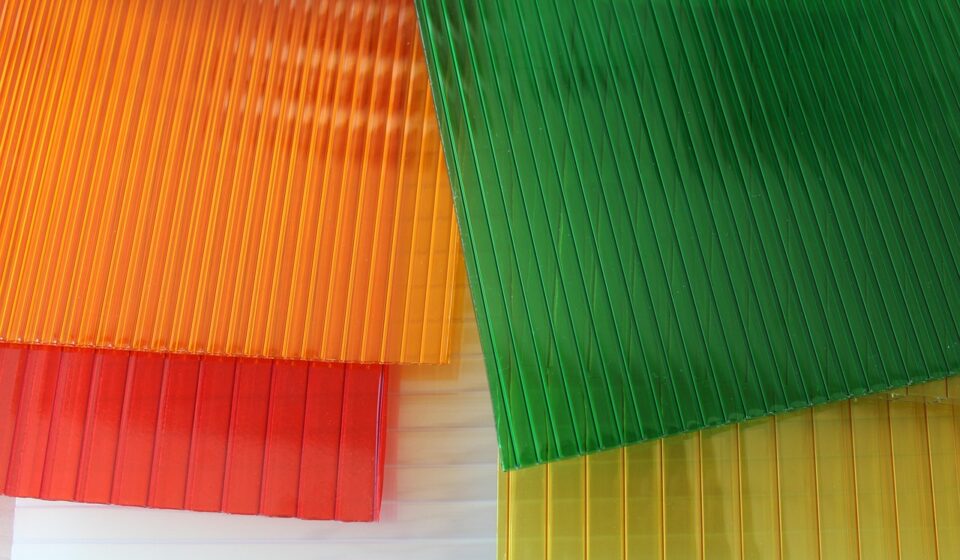
| Multiwall polycarbonate | Better insulation and stiffness at low weight | Greenhouses, skylights, canopies, roof panels, daylighting systems | Less optical clarity than solid sheet and requires correct edge sealing |
| Corrugated polycarbonate | Lightweight roofing profile with drainage stiffness | Patio roofs, pergolas, agricultural shelters, sidewalls | Must match the support profile and fastening system |
| Hard-coated polycarbonate | Improved abrasion and sometimes chemical resistance | Viewing windows, public-facing guards, high-touch panels | Costs more and may have forming restrictions |
| Tinted, opal, or diffused sheet | Controls glare, privacy, or light diffusion | Signs, lighting covers, privacy screens, architectural glazing | Lower light transmission than clear sheet |
Solid sheet is usually the starting point when the part must behave like a tough transparent plate. Multiwall sheet is usually selected when the panel needs to cover a larger area while improving insulation. Corrugated sheet is more closely tied to roofing and agricultural systems, where profile compatibility, overlap, and weather sealing affect the final installation.
Compare performance specifications, not marketing claims
A useful supplier quote should be backed by a product data sheet. The data sheet should identify the exact grade, color, thickness, surface treatment, test methods, and any warranty limits. General claims such as impact resistant, UV protected, or flame retardant are not enough for specification work unless the supplier can show what they mean for the exact sheet being offered.
For clear solid sheet, manufacturer data sheets commonly report visible light transmission in the mid-to-high 80 percent range for thin clear grades tested by ASTM D1003. For example, published Plaskolite TUFFAK data lists clear light transmission around 86 percent at 0.118 inch, while another optical-grade clear polycarbonate sheet data sheet lists 88 percent at the same nominal thickness. These figures are useful for comparison, but they should not be copied to a different color, coating, thickness, or brand without checking the exact product data.
Impact resistance also needs careful reading. Polycarbonate is known for toughness, but real protection depends on thickness, unsupported span, fastening method, impact energy, service temperature, and whether the sheet has been drilled, notched, formed, or exposed to incompatible chemicals. A thicker sheet is not automatically safe if the frame is weak or the fasteners create stress cracks.
| Specification to check | Why it matters | Buying note |
|---|---|---|
| Light transmission and haze | Affects visibility, plant growth, displays, and daylighting | Compare values for the exact color and thickness |
| UV protection | Reduces yellowing and loss of properties outdoors | Confirm whether protection is one side or two sides |
| Thermal expansion | Prevents buckling, edge binding, and fastener stress | Leave installation clearance according to the data sheet |
| Impact test data | Helps assess toughness for guards and safety panels | Match test method and thickness to the intended use |
| Fire classification | May be required by building, electrical, or equipment rules | Do not assume every polycarbonate sheet has the same rating |
| Coating type | Controls abrasion, chemical resistance, UV durability, or anti-fog behavior | Check whether the coating can be cut, drilled, bent, or thermoformed |
Match thickness to span, impact, and stiffness
Thickness is often the first question buyers ask, but it should be the final number confirmed after the application is understood. The same 6 mm sheet may be adequate for one framed cover and inadequate for a wide unsupported guard. Span, load, deflection limits, expected impact, and fastening details all influence the choice.
Indoor covers and display panels
Thin solid polycarbonate can work well for protective covers, sneeze guards, point-of-sale displays, and light-duty enclosures when the panel size is small or the sheet is well supported. The main buying considerations are optical quality, flatness, edge finish, scratch exposure, and cleaning frequency. If the panel will be wiped often, a hard-coated grade may justify the added cost.
Machine guards and industrial windows
Machine guarding requires more than ordering a tough transparent sheet. OSHA’s general machine-guarding rules in the United States require guarding methods to protect operators and employees from hazards such as point-of-operation exposure, rotating parts, flying chips, and sparks. In practical terms, the buyer has to look at the whole guard: sheet thickness, frame strength, fastener spacing, visibility, opening size, maintenance access, and the hazard energy involved. A supplier’s standard sheet data can support material selection, but it does not replace a risk assessment for the machine.
Greenhouses and daylighting panels
For greenhouses, the choice is usually between solid, twinwall, and multiwall sheet. Clear solid sheet can provide better see-through clarity, while multiwall sheet offers better insulation and stiffness. The trade-off is that multiwall structures can reduce direct clarity and may lower light transmission depending on wall count, color, thickness, and coating. Greenhouse buyers should request light transmission, U-value or insulation value, UV warranty, recommended support spacing, condensation guidance, and edge-sealing instructions.
Canopies, skylights, and outdoor glazing
Outdoor panels need UV protection and enough allowance for heat movement. Polycarbonate expands and contracts more than glass or metal framing, so holes and edge clearances must be sized correctly. If a sheet is clamped too tightly, thermal movement can cause bowing, noise, stress whitening, or cracks around fasteners. For roof and skylight work, do not select thickness by appearance alone. Use the manufacturer’s span and load tables for the specific sheet profile and thickness.
Check UV, surface, and fire requirements before ordering
Outdoor use is one of the most common areas where buyers make costly mistakes. Standard indoor sheet may look the same as UV-protected sheet when new, but long-term sunlight exposure can cause yellowing, brittleness, and loss of clarity if the grade is not designed for exterior service. Many outdoor sheets use a coextruded UV protective layer. Some are protected on one side only, which means the marked side must face the sun. Others are protected on both sides, which can reduce installation risk.
Surface hardness is a separate issue. Polycarbonate is tough, but it is not naturally as scratch resistant as glass. For bus shelters, machine windows, public partitions, retail displays, and frequently cleaned panels, scratch resistance may be more important than basic impact strength. Hard-coated grades can improve abrasion resistance, but buyers should confirm coating compatibility with bending, thermoforming, printing, solvent cleaning, and edge polishing. See also: Care and Storage.
Fire performance also needs precise wording. UL Solutions describes UL 94 as a plastics flammability classification test for plastic materials used in devices and appliances. The standard is useful for comparing burning behavior of polymeric materials under defined test conditions, but it should not be treated as a general building fire-resistance rating. If the sheet will be used in a ceiling, wall, skylight, transit, electrical, or equipment enclosure application, check the applicable local code and request documentation for the exact grade and thickness.
Plan fabrication and installation early
Polycarbonate sheet is easier to fabricate than glass, but it still needs correct handling. Poor fabrication can ruin a suitable material. Drilled holes should normally allow movement, edges should be smooth, and sharp internal corners should be avoided because they can concentrate stress. If bending or thermoforming is required, confirm the minimum bend radius, forming temperature guidance, and whether any coating limits forming.
Cleaning is another practical issue. Many polycarbonate sheets can be cleaned with mild soap and water, but strong solvents, ammonia-based cleaners, or incompatible chemicals may cause crazing or loss of clarity. This matters in factories, food-service areas, laboratories, public buildings, and agricultural environments where cleaning agents may be stronger than household detergent.
Installation details are especially important outdoors. Use compatible gaskets and sealants, avoid over-tightening screws, and keep protective film on the sheet until cutting and fitting are complete. For multiwall panels, the flutes should be oriented and sealed according to the manufacturer’s instructions so condensation can drain and dust or insects are less likely to enter the channels.
Questions to ask before comparing quotes
Two polycarbonate quotes can look similar while describing very different products. Before selecting a supplier, ask for answers in writing and keep the data sheet with the purchase record.
- What is the exact grade name, manufacturer, thickness, color, and sheet structure?
- Is the sheet intended for indoor use, outdoor use, or both?
- Is UV protection on one side or both sides?
- What are the light transmission and haze values for this exact sheet?
- What impact, tensile, and thermal expansion data are available?
- Does the sheet carry any fire classification, and at what thickness?
- Is the surface hard-coated, anti-fog, anti-static, diffused, tinted, or plain?
- Can the sheet be cut, drilled, cold bent, thermoformed, printed, or bonded?
- What are the recommended installation clearances and fastener details?
- What warranty applies, and what conditions can void it?
The best purchase is not always the thickest sheet or the lowest price. It is the sheet whose documented performance matches the application with enough margin for installation, cleaning, weather exposure, and regulatory requirements.
Frequently asked questions
Is polycarbonate sheet better than acrylic sheet?
Polycarbonate is generally chosen when impact resistance and toughness are priorities. Acrylic is often chosen when surface hardness, optical clarity, and weathering appearance are more important. The better choice depends on the application. For machine guards and high-impact covers, polycarbonate is often preferred. For display cases and signage where scratching is a concern, acrylic may still be competitive.
Does every polycarbonate sheet work outdoors?
No. Outdoor use should be limited to grades designed for weather exposure. Ask for UV-protected sheet and confirm whether the UV layer is on one side or both sides. If the sheet has a marked UV side, it must face outward toward sunlight.
What thickness of polycarbonate sheet should I buy?
There is no universal thickness. A small framed cover, a large canopy, a greenhouse roof, and an industrial machine guard all require different design assumptions. Start with the application, span, load, impact exposure, and support method, then check the manufacturer’s span or engineering data for the exact sheet.
Why does polycarbonate crack around screws?
Cracking around screws is often related to stress concentration, over-tightening, undersized holes, incompatible cleaners or sealants, or insufficient clearance for thermal expansion. Use smooth holes, compatible hardware, proper washers or gaskets, and installation clearances recommended by the sheet manufacturer.
Can polycarbonate sheet be recycled?
Polycarbonate is a thermoplastic, so clean industrial scrap can often be recycled through appropriate plastics recycling channels. Real-world recycling depends on local facilities, contamination, coatings, color, and whether the sheet is mixed with films, sealants, or other materials. Buyers with sustainability goals should ask suppliers about take-back options or recycled-content grades before ordering.