Carbon fibre reinforced polymer selection guide for lightweight engineering parts
Why CFRP is selected
Carbon fibre reinforced polymer, often shortened to CFRP, is not a single plastic material. It is a composite system: carbon fibres provide most of the load-bearing stiffness and strength, while the polymer matrix binds the fibres, transfers shear, protects the reinforcement and defines much of the processing and service-temperature window. CFRP is a strong candidate when a part must be light, stiff, fatigue resistant and dimensionally stable, and when the project can support higher material cost, controlled processing and inspection. It is a poor fit when low price, simple molding, high bearing damage tolerance or easy recycling is the main requirement. For broader resin and reinforcement comparisons, see the Polymer Selection category.
What makes CFRP different from a filled polymer
A conventional filled polymer usually starts with a resin grade and uses fillers or short fibres to improve stiffness, wear resistance or dimensional stability. CFRP selection is different. The engineering performance comes from the full laminate: fibre grade, fibre direction, fabric or tape form, resin chemistry, fibre volume, void content, cure or consolidation quality, ply stacking sequence and joint design.

For that reason, two parts described as carbon fibre reinforced polymer can behave very differently. A unidirectional epoxy prepreg designed for an aircraft skin, a woven carbon fabric used in a sporting component, a chopped carbon fibre sheet molding compound and a thermoplastic carbon tape are all CFRP, but they are not interchangeable material choices.
Fibre architecture controls directionality
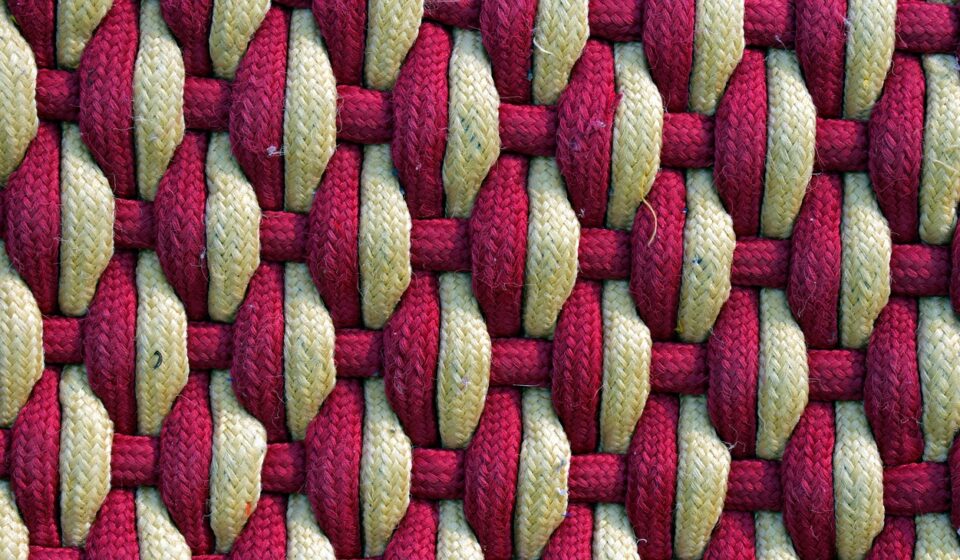
Continuous unidirectional fibres deliver high stiffness and strength along the fibre direction, with much lower capability transverse to the fibres. Woven and multiaxial fabrics spread reinforcement across more directions and can improve handling and drape. However, crimp in woven fabric can reduce straight-fibre efficiency compared with tape. Chopped carbon fibre compounds are easier to mold into complex shapes, but they normally cannot match continuous-fibre laminates in highly loaded structural parts.
The polymer matrix sets the service window
Epoxy is widely used where adhesion, dimensional stability and mechanical performance are important. Vinyl ester and polyester systems may be selected for some industrial or marine applications. High-performance thermoplastics such as PPS, PEEK, PEKK, PEI or reinforced polyamides can offer faster forming, weldability in some systems or improved toughness, but they require suitable consolidation temperature, pressure and equipment. The matrix also influences moisture uptake, chemical resistance, impact behavior, fire performance and repair strategy.
When CFRP adds real value
CFRP is most convincing when weight reduction creates measurable system value. In transport, a lighter structure can reduce energy use or increase payload. In automation, a lighter moving arm can improve acceleration and reduce vibration. In pressure vessels, sporting goods and rotating parts, high specific stiffness or strength can justify the material premium.
- Use CFRP when stiffness-to-weight is critical. This is often the main reason to choose carbon fibre rather than glass fibre or metal.
- Use CFRP when corrosion resistance matters. The polymer matrix can protect against many environments, although chemical resistance must be checked for the selected resin.
- Use CFRP when fatigue performance is a design driver. Properly designed laminates can perform well under cyclic loading, but fatigue data must come from the chosen material system and loading mode.
- Be cautious when impact, bearing or crush damage dominates. CFRP can hide internal delamination after impact, so inspection and damage tolerance must be part of the design.
- Be cautious when the part must be very low cost. Carbon fibre, controlled layup and quality assurance usually cost more than short glass fibre thermoplastics or aluminum fabrication.
Key selection variables before specifying CFRP
| Decision area | What to define | Why it matters |
|---|---|---|
| Load direction | Tension, compression, bending, torsion, bearing and impact cases | CFRP is anisotropic, so properties depend heavily on fibre orientation and laminate sequence. |
| Part geometry | Curvature, thickness changes, holes, ribs and attachment points | Sharp geometry changes can cause wrinkling, resin-rich areas, stress concentration or difficult consolidation. |
| Service environment | Temperature, moisture, chemicals, UV, fire exposure and electrical contact | The polymer matrix, coating and isolation details often control durability more than the carbon fibre itself. |
| Production volume | Prototype, low-rate structural part or high-volume molded component | Prepreg layup, resin transfer molding, compression molding and thermoplastic forming have different economics. |
| Verification level | Coupon testing, element testing, nondestructive inspection and repair rules | Structural CFRP should be qualified as a material and process combination, not only as a datasheet material. |
Processing routes and cost implications
The process is part of the material selection. Prepreg layup with autoclave curing remains important for high-performance aerospace-style structures because it offers tight control of fibre placement, resin content and voids. The trade-off is higher cost for freezer storage, labor, tooling, cure cycles and quality control.
Out-of-autoclave prepregs and vacuum-bag processes can reduce equipment cost, but they still require careful layup, debulking and cure management. Resin infusion and resin transfer molding place dry fibre into the tool first and then introduce resin. These routes can suit larger parts or closed-mold production if permeability, wet-out and void control are well managed.
For higher-volume applications, compression molding of carbon fibre sheet molding compound or chopped fibre compounds can shorten cycle time and form more complex shapes. Performance is usually less directional and less predictable than continuous-fibre laminates, but the manufacturing economics can be attractive for brackets, covers and semi-structural parts.
Thermoplastic CFRP is gaining attention because it can be reheated, formed, welded in some cases and processed in shorter cycles. However, high melt viscosity and high processing temperatures can make impregnation and consolidation difficult. Selection should consider whether the production team has the right press, heating method, tooling and temperature control.
Testing, standards and design verification
Datasheet values are useful for screening, but they are not enough for a critical CFRP design. ASTM D3039/D3039M is commonly referenced for tensile properties of polymer matrix composite materials, including those reinforced by high-modulus fibres. ISO 14125 covers flexural properties for fibre-reinforced plastic composites. Impact and compression-after-impact methods, shear tests, open-hole tension, open-hole compression and bearing tests may also be needed depending on the part.
Engineering organizations often use structured composite guidance such as CMH-17 for data development, statistical allowables, equivalency and design practice. The important point for material selection is that CFRP performance belongs to a qualified material-process-laminate combination. Changing fibre supplier, resin formulation, cure cycle, ply orientation, fibre volume or plant process can change the result enough to require additional verification.
Inspection planning should start early. Ultrasonic testing, thermography, tap testing, X-ray or other nondestructive evaluation methods may be relevant, depending on part thickness and damage mode. If the project cannot inspect likely defects, the design should be simplified or another material should be considered.
Limitations that are often underestimated
CFRP has limits that are easy to miss during early material screening. Carbon fibres are electrically conductive, so contact with metals such as aluminum in the presence of an electrolyte can create galvanic corrosion risk unless isolation layers, coatings or joint designs are used. NIST publications on fibre-reinforced polymer systems have highlighted this compatibility issue for metals in contact with carbon fibres. See also: Buying Guides.
Impact behavior is another common concern. A laminate can look acceptable from the outside while carrying internal delamination or matrix cracking. For safety-related parts, visible surface inspection is not enough. Damage tolerance, repair method and allowable defect size should be specified before production.
Fire, smoke and toxicity requirements are controlled mainly by the matrix and additives, not by the carbon fibre alone. A resin that performs well mechanically may not automatically satisfy rail, aerospace, marine or building fire requirements. Temperature also needs careful treatment: a laminate used near or above its qualified glass transition or continuous-use temperature can lose stiffness, strength or dimensional stability.
End-of-life planning is improving but remains more complicated than recycling many metals. Thermoset CFRP is difficult to remelt because the cured network is crosslinked. Mechanical grinding, pyrolysis, solvolysis and emerging recyclable resin systems are active areas of development. ISO 30012 addresses measurement of crushed CFRP for recycling-related use, and ISO 19374:2026 provides a designation system for recycled carbon fibres used in polymer composites. These standards do not make every CFRP part circular, but they show that recycled carbon fibre is becoming more standardized as a material stream.
A practical CFRP selection checklist
Before choosing CFRP, the material team should be able to answer these questions in writing:
- What exact mass, stiffness, fatigue, corrosion or thermal-expansion target requires carbon fibre rather than glass fibre, aramid fibre, aluminum, magnesium or a high-performance thermoplastic?
- Which fibre form and ply orientations match the real load paths?
- Which resin matrix meets the temperature, chemical, moisture, fire and processing requirements?
- Can the selected manufacturing route control fibre alignment, void content, thickness and surface quality?
- Which standards, coupon tests and subcomponent tests will be used to verify design values?
- How will holes, inserts, adhesive bonds, fasteners and metal contacts be designed?
- What inspection, repair and end-of-life route is realistic for the application?
If these questions cannot be answered, CFRP may still be attractive for prototyping or noncritical parts, but it should not be treated as a simple drop-in replacement for metal or molded plastic.
Frequently asked questions
Is carbon fibre reinforced polymer stronger than steel?
It can have a higher strength-to-weight ratio than steel in selected fibre directions, but that does not mean every CFRP part is stronger than every steel part. Steel is isotropic, ductile and easy to join. CFRP is directional and laminate dependent, so the comparison must use the actual part geometry, load case, safety factor and damage tolerance requirement.
Is CFRP the same as carbon fibre?
No. Carbon fibre is the reinforcement. CFRP is the finished composite made from carbon fibre plus a polymer matrix. The fibre alone does not define the laminate properties, processing route, environmental resistance or repair behavior.
Can CFRP be injection molded?
Short carbon fibre reinforced thermoplastics can be injection molded, but continuous-fibre CFRP structures are usually made by layup, molding, infusion, pultrusion, filament winding or thermoplastic tape processes. Injection molded short-fibre parts are useful, but they should not be assumed to match continuous-fibre laminate performance.
Is CFRP recyclable?
Some CFRP waste can be processed to recover carbon fibre, and standards for recycled carbon fibre terminology and measurement are developing. Recycling is still application dependent because resin chemistry, contamination, fibre length and retained fibre properties affect the value of recovered material. Designers should plan recycling or reuse early rather than assuming it will be easy at end of life.
When should a designer avoid CFRP?
A designer should avoid CFRP when the project cannot justify its cost, cannot control processing quality, cannot inspect relevant defects or needs a highly ductile, low-cost, easily recyclable material. In those cases, glass fibre composites, metal alloys or engineered thermoplastics may provide a better balance of performance and risk.